AW-10865990051
About IOblend

We built IOblend because enterprise data integration had become harder than it needed to be. The architecture should work for you, not the other way round.

IOblend is an independent enterprise data integration and DataOps platform built to connect, transform, govern and synchronise data across the systems organisations already own. It supports batch, Change Data Capture and real-time streaming on Apache Spark across cloud, on-premises and hybrid environments.

Our point of view is simple: organisations should not have to rebuild their entire technology estate just to make data usable for AI, analytics, applications and modernisation. IOblend provides the production layer between systems so the stack can evolve without every new initiative becoming another integration programme.

Keep your stackWork with the platforms and systems already in place.
Keep logic portableUse visual development, SQL, Python and reusable playbooks.
Keep controlRun in customer-controlled infrastructure.
IOBLEND · WHY WE EXIST systems → production layer → business use
01
The estate you already own ERP, CRM, databases, SaaS, APIs, files, events and legacy systems.
IO
IOblend production data layer Connect, transform, validate, govern, synchronise and maintain state.
03
Where the business needs data next Fabric, Databricks, Snowflake, analytics, AI and operational applications.
The IOblend belief Data architecture should remain flexible even when platforms, applications and business priorities change.
Independent Not another warehouse, lakehouse or SaaS data destination.
Production-grade Designed for live enterprise data movement, not just prototypes.
Built for change Reusable patterns across modernisation, AI and analytics programmes.
Why IOblend exists

The same integration problems kept appearing in every generation of enterprise technology.

The platforms changed. The cloud arrived. Then big data, IoT and AI arrived. But the underlying work remained familiar: connect systems, move data, transform it, check it, keep it current, understand what changed, and make the whole thing reliable enough for production.

01 · Repetition

Every new initiative created another integration project.

Cloud migration, analytics, AI, operational reporting and application modernisation often rebuild the same source connectivity, transformation and quality logic in different places.

02 · Fragmentation

The toolchain became more complicated than the data problem.

Batch, streaming, CDC, quality, lineage, orchestration and exception handling can easily become separate products, teams and operating models.

03 · Dependency

Architecture choices became expensive to change.

When integration logic becomes tightly coupled to one platform, moving workloads or adding a new system can trigger another round of engineering and migration effort.

A clean-sheet design

So we designed the integration layer around the problem, not around another destination platform.

IOblend was created around a simple premise: one production environment should be able to handle the difficult work between systems while giving engineers, architects and business teams enough control to adapt it to real enterprise requirements.

Architecture

Independent by design

Connect systems and strategic platforms without making the production integration layer dependent on one vendor ecosystem.

Execution

Apache Spark underneath

Use a proven distributed processing framework for production batch and streaming workloads while IOblend manages the pipeline layer above it.

Development

Visual where useful, code where needed

Build visually, then use SQL and Python when specialist logic or engineering control is required.

DataOps

Governance in the flow

Bring validation, lineage, schema, metadata and exception handling into the production pipeline lifecycle.

Portability

Reusable production logic

Represent pipeline intent through reusable metadata and standard languages so architectural change does not mean starting again.

Deployment

Your infrastructure

Run in customer-controlled cloud, on-premises or hybrid environments rather than forcing enterprise data into an IOblend-hosted platform.

What we built

A production data layer that turns architecture into executable pipelines.

IOblend combines a visual Designer, reusable pipeline metadata and the IOblend Engine with Apache Spark execution. The result is a production environment for building, testing, running and managing enterprise data pipelines across batch, CDC and streaming.

IOblend DesignerBuild and test pipeline logic visually with SQL and Python where required.
Portable playbooksStore reusable pipeline intent as metadata rather than platform-specific glue.
IOblend EngineTurn pipeline metadata into managed Spark execution.
Built-in DataOpsTesting, quality, lineage, state, schema and exception controls in one lifecycle.
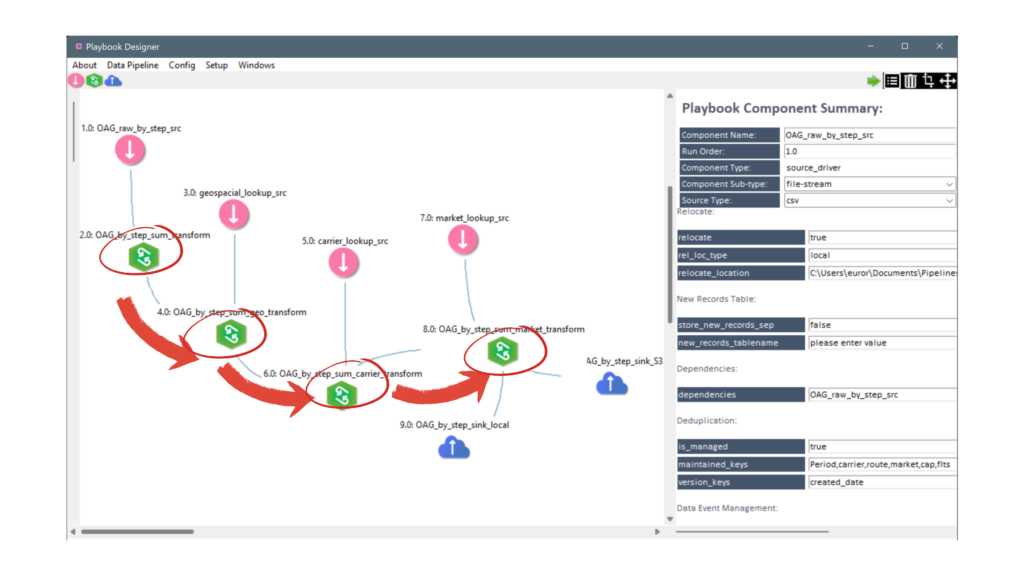
IOblend modular enterprise data integration pipeline showing reusable source, transformation and destination components
First-party product visual Reusable pipeline patterns rather than repeated bespoke integration. The product is designed to make production data engineering more visible, reusable and easier to operate.
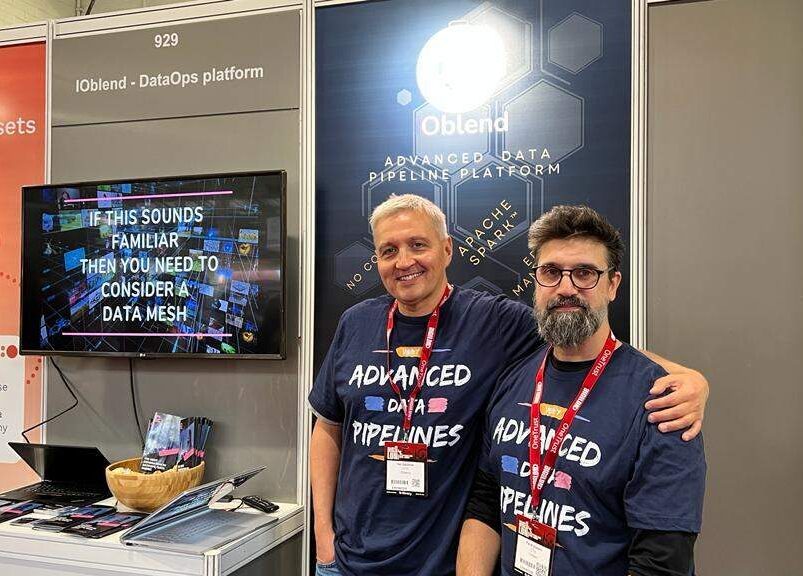
IOblend founders presenting the IOblend DataOps platform at an industry event
The people behind IOblend Built from hands-on enterprise data experience.
Our journey

IOblend came out of years of building and running difficult data programmes.

IOblend’s founders have spent decades working with complex business intelligence, data engineering and data management initiatives. The recurring frustration was not a lack of technology. It was the amount of time, cost and specialist effort required to make different systems work together reliably.

01
Enterprise data firstThe product started from recurring delivery problems seen across real data programmes.
02
Real-time changed the requirementBig data, IoT and AI increased the need for fresh, governed data across hybrid environments.
03
Product, not another projectThe goal became to turn repeatable production engineering patterns into software.
Where IOblend fits

Between the systems you run today and the platforms you want to get more value from.

IOblend complements Microsoft Fabric, Databricks, Snowflake and other strategic platforms. It is most useful where the architectural problem sits between systems: legacy connectivity, real-time data, CDC, migration, synchronisation, data quality and production governance.

Keep the platforms. Standardise the production data work around them.

Use IOblend as the independent layer that connects operational and legacy systems, applies production controls, and delivers trusted data to the platform or application that needs it next.

Microsoft FabricFeed the Microsoft data estateConnect operational and legacy systems without making every source Fabric-specific.
DatabricksSupport the lakehouseKeep upstream connectivity and production controls reusable across hybrid sources.
SnowflakeDeliver trusted dataManage source-side movement, transformation and synchronisation before consumption.
Enterprise systemsKeep systems of record usefulSAP, Salesforce, Oracle and legacy technology remain part of the architecture.
What organisations use IOblend for

Different programmes. The same production data problem underneath.

Whether the visible initiative is AI, real-time analytics or modernisation, the production requirement is usually similar: get data from multiple systems into a reliable, governed and usable state without creating another fragile integration estate.

AI + analytics

Feed AI with fresh enterprise data

Connect operational and historical information, apply quality and context, and keep the production data flow current as AI applications move beyond the prototype stage.

Real-time operations

Combine live events with business context

Use streaming, CDC and batch data together for IoT, operational analytics, monitoring and event-driven applications without operating separate integration stacks.

Modernisation

Move without one high-risk cutover

Synchronise legacy and target systems, reconcile results and run environments in parallel until the organisation is ready to switch.

IOblend today

A UK-built enterprise data integration product with a clear architectural point of view.

IOblend is a brand of Connect.IO Ltd. The product is focused on production data integration, DataOps and real-time processing, with deployment designed for customer-controlled cloud, on-premises and hybrid environments.

Company

Connect.IO Ltd

IOblend is the enterprise data integration and DataOps product brand of Connect.IO Ltd, built around Apache Spark and designed for production data movement across complex enterprise estates.

IOblend brand United Kingdom Enterprise data integration
Published IOblend address

Coventry, United Kingdom

Union House
111–113 New Union Street
Coventry
CV1 2NT
United Kingdom

This is the company address currently published on ioblend.com.

Core technology Apache Spark + IOblend Engine Distributed production execution with IOblend managing reusable pipeline logic and controls.
Processing Batch, CDC + streaming One production environment for historical data, database change and live event processing.
Deployment Cloud, on-premises + hybrid Designed to run inside infrastructure controlled by the customer.
Architectural role Independent production data layer Connect systems and strategic platforms without becoming another data destination.
In one line

IOblend helps organisations make the technology estate they already own work together more effectively, without requiring the business to rebuild around another enterprise data platform.

About IOblend FAQ

A few useful facts about the company and the product.

The answers below cover IOblend’s architectural role, technology foundation, deployment model and relationship with the strategic platforms organisations already use.

What is IOblend?

IOblend is an enterprise data integration and DataOps platform for building, running and managing production data pipelines across batch, Change Data Capture and streaming workloads.

Why was IOblend created?

IOblend was created to simplify the recurring integration, transformation, quality and governance work that appears across enterprise data programmes, modernisation initiatives, analytics and AI projects.

What technology does IOblend use?

IOblend uses Apache Spark as the distributed processing foundation. The IOblend Designer and Engine add reusable pipeline metadata, visual development and production DataOps controls around Spark execution.

Does IOblend replace Microsoft Fabric, Databricks or Snowflake?

No. IOblend is designed to complement strategic platforms by handling production data movement, transformation, synchronisation and governance across the broader enterprise estate.

Where does IOblend run?

IOblend is designed to run in customer-controlled infrastructure, including cloud, on-premises and hybrid environments.

Who owns IOblend?

IOblend is a brand name of Connect.IO Ltd, a UK company based in Coventry.

See IOblend in the context of your estate

Bring us the data problem you are trying to simplify.

We can look at the systems, platforms, latency requirements, governance controls and modernisation constraints, then show where an independent production data layer can remove repeated engineering without forcing a platform replacement.

Scroll to Top