
Transport data integration for networks that change every minute.
IOblend connects vehicles, road infrastructure, telematics, transport-management systems, orders, depots, warehouses, maintenance, traffic, weather and customer data into governed production pipelines. Combine live movement with historical and operational context to support road-network management, connected vehicles, live ETA, route optimisation, fleet maintenance, EV charging, freight visibility and AI on customer-controlled Apache Spark infrastructure.
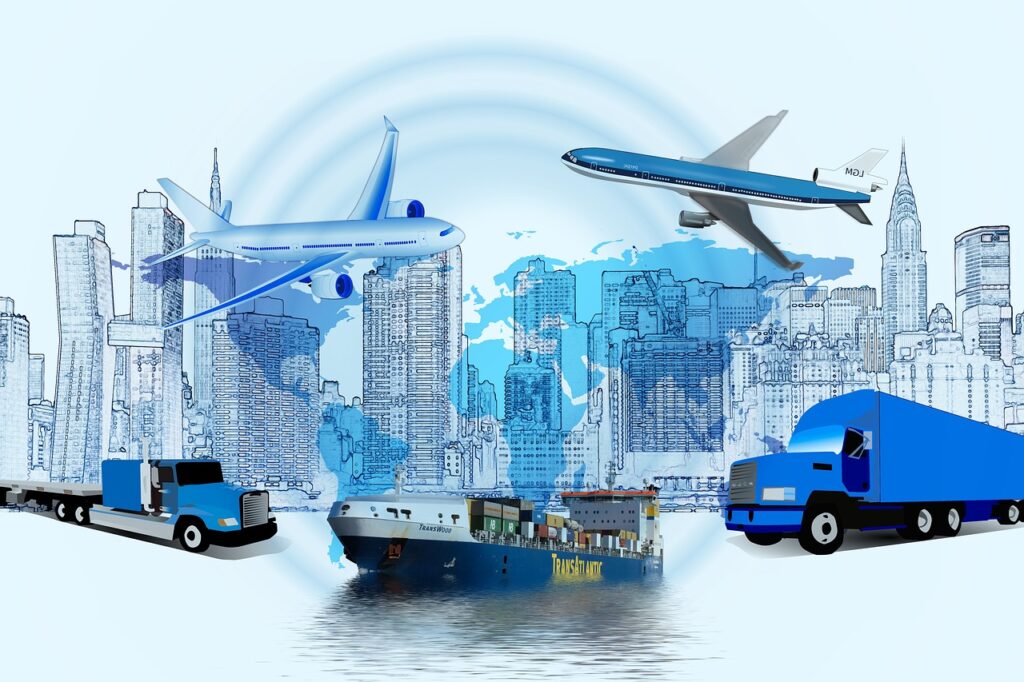
The transport decision exists across the vehicle, network, load and customer systems.
Logistics and transport data integration connects what is moving to why it is moving, where it should go and what is changing around it. A vehicle position has limited value until it is joined to route, load, driver, traffic, weather, depot, maintenance, order and service commitments.
Fuse road, vehicle and incident signals before congestion or obstruction becomes a larger network problem.
Modern road operations can combine stopped-vehicle detection, traffic flow, CCTV events, weather, lane state, variable speed limits and control-room workflows. IOblend can prepare and correlate those feeds into a governed operational dataset that authorised road-management systems can use for incident awareness, traffic analysis and predictive network operations.
Autonomous systems need a governed data path around the vehicle as much as intelligence inside it.
Connected and automated vehicles can generate perception, localisation, vehicle-state, infrastructure and safety-event data at high frequency. IOblend can prepare live and historical data for fleet monitoring, simulation, safety analysis, model evaluation and operational supervision while keeping the authorised driving system separate from the integration layer.
Illustrative sensor and context fusion
Recalculate the plan when traffic, weather, loading or the customer promise changes.
A useful ETA is more than the latest GPS coordinate. It depends on current vehicle movement, orders, stop sequence, loading state, traffic, weather and service commitments. IOblend can maintain that changing context as a streaming dataset so routing and prediction models can continuously recalculate the most useful next decision.
Illustrative live route comparison
Use the vehicle while it is healthy, and intervene before condition becomes disruption.
Fleet maintenance becomes more predictive when engine, tyre, battery, fuel and diagnostic data is joined to mileage, route, load, driver, service history and component records. IOblend can prepare those high-frequency signals as current model features while preserving the maintenance context behind them.
Illustrative rolling fleet telemetry
Charge for the next duty cycle, not simply because the vehicle is plugged in.
Electric fleet operations need vehicle state of charge, planned routes, departure times, charger availability, depot constraints and energy prices to stay aligned. IOblend can create the current optimisation dataset behind charging and dispatch decisions without replacing charger-control or fleet-management systems.
Illustrative depot charging state
Manage the disruption across the network, not just the delayed truck, train or vessel.
A shipment can depend on road legs, port calls, rail slots, warehouse capacity, customs, carriers and customer delivery windows. IOblend can correlate changing events across those systems so control-tower and optimisation tools receive the downstream impact of a disruption, not merely another isolated status message.
Illustrative multimodal network state
Track what happened to the shipment, not only where the container is now.
High-value, food, pharmaceutical and temperature-sensitive freight can require chain-of-custody events, location, handling and sensor conditions to remain connected throughout the journey. IOblend can combine those events into a traceable movement history while validating late, duplicate or inconsistent records.
Illustrative shipment event history
Keep safety, vehicle and logistics standards at the interfaces, with reusable data logic across the network.
Transport estates span infrastructure operators, vehicles, logistics systems, trading partners and external data services. IOblend can work around those interfaces while keeping transformation, quality, state, lineage and routing logic portable across the wider data architecture.
Questions transport data teams ask before connecting vehicles, networks and freight.
These answers focus on production data across road operations, fleets, connected vehicles, ETA, routing, charging, freight and predictive maintenance.
What does IOblend do for logistics and transport organisations?
IOblend provides a production data integration and DataOps layer across vehicles, road infrastructure, telematics, TMS, orders, depots, warehouses, maintenance, traffic and external data. It combines streaming, batch and CDC data with transformation, state, quality and record-level lineage.
How can IOblend support connected or smart road operations?
IOblend can combine traffic flow, incident, infrastructure, weather and other authorised road-network feeds into governed operational datasets for monitoring, forecasting and incident analytics. It does not issue safety-critical road-control commands.
Can IOblend work with connected and automated vehicle data?
Yes. Vehicle-state, telematics, infrastructure, safety-event and other approved data can be processed for fleet supervision, safety-event replay, simulation datasets and model evaluation. IOblend is not an automated driving system.
How can IOblend improve live ETA pipelines?
IOblend can combine GPS and telematics streams with orders, stops, traffic, weather and customer commitments, handle late-arriving events and create stateful features such as rolling speed, dwell time and route progress for ETA models.
Can IOblend support dynamic route optimisation?
Yes. Current route, vehicle, traffic, order and external context can be delivered to the organisation's route-optimisation model or dispatch system as conditions change.
How does IOblend support predictive fleet maintenance?
High-frequency engine, tyre, battery and diagnostic data can be joined with mileage, duty cycle, maintenance history and component records to create current governed features for maintenance and reliability models.
Can IOblend support EV fleet charging optimisation?
Yes. State of charge, planned duty, charger availability, depot constraints and approved energy signals can be combined into a current dataset for charger scheduling, dispatch readiness and battery-health analytics.
Can IOblend support a logistics control tower?
Yes. Road, rail, port, carrier, warehouse and shipment events can be correlated into a common movement model so control-tower tools see dependencies and downstream service impact rather than isolated status messages.
Can IOblend process logistics documents?
Yes. AI steps inside the ETL pipeline can extract defined data from manifests, proof-of-delivery, carrier correspondence or other documents, validate the result and quarantine uncertain records before downstream use.
How can IOblend support cargo traceability and cold chain?
Chain-of-custody, location and sensor events can be combined into a traceable shipment history. IOblend can validate late, duplicate and inconsistent records and preserve record-level lineage.
Does IOblend replace a TMS, road-control system, routing engine or autonomous driving stack?
No. Those remain specialist operational and safety systems. IOblend connects and governs the production data between them so integration, state, quality and lineage logic can be reused across analytics and AI initiatives.
When is IOblend a strong fit for logistics and transport?
IOblend is a strong fit when live vehicle or infrastructure data must be joined with orders and historical context, when multiple transport systems need synchronisation, or when teams are maintaining too much custom engineering around routing, ETA, control towers, fleet AI and modernisation.
Bring us the vehicle, infrastructure, shipment and operational systems that should already share context.
We can map the live movement data, historical context, decision latency, quality rules and downstream consumers, then turn that logic into a reusable production pattern across the wider transport network.