

The Triple Threats to Data Integration: High Costs, Long Timelines and Quality Pitfalls-can we tame the chaos?
Businesses today work with a ton of data. As such, getting the sense of that data is more important than ever. Which then means, integrating it into a cohesive shape is a must. Data integration acts as a key enabler to make data-driven decisions. At its core, data integration is about bringing data from different sources into a single view. While it might seem straightforward on the surface, the reality of making it happen is complex. From outdated systems to inconsistent data formats and a sheer volume of information, achieving smooth data integration can feel like a Herculean task.
Consider a retail company trying to unify its data from online sales, physical store locations and marketing campaigns to gain deeper customer insights. The project drags on for months, with software and licensing costs ballooning. Worse, when the data finally comes together, issues like errors in customer profiles, order histories and preferences lead to poorly targeted campaigns. This scenario shows the pressing challenges of data integration. Don’t worry though, there are ways to tackle these obstacles and make integration work for you.
The Major Challenges of Data Integration
Data quality
- The Messiness Factor: Poor data quality is one of the biggest issues businesses face when integrating data. It’s like trying to assemble a puzzle with missing or mismatched pieces. Duplicates, inconsistent formats, missing data and errors all contribute to integration headaches.
- Widespread Problem: According to research by Great Expectations, 77% of organisations struggle with data quality issues (Great Expectations, 2022). This leads to decisions based on unreliable data, inefficiencies and increased costs.
- Costly Mistakes: In 2017, a major American medical company attempted to integrate patient data from multiple sources, including lab results, patient records and insurance claims. The poor data quality resulted in an enormous $34 million expense to fix. It was a harsh reminder that if your data is messy, it can create costly and time-consuming problems.
High costs
- Rising Expenses: Data integration doesn’t normally come cheap. There is never a straightforward use case, so specialised tools, software and often long development time all add up.
- The Cost of Cutting Corners: Because of that, many companies are tempted to cut corners when it comes to data integration. We need the data yesterday so get on with it. Marketing expert Frank Sonnenburg put it well though, “The cost of being wrong is often much higher than the cost of doing it right.” Skimping on integration costs might be tempting but can lead to inefficiencies, mistakes and expensive course corrections.
- Value of Proper Investment: While initial costs may sting, investing in robust data integration solutions and planning upfront often saves money and frustration in the long run.
Time-consuming processes
- Lengthy and Frustrating: Bringing data together from multiple systems is often a time-consuming challenge. It can feel like playing an endless game of Tetris with mismatched data blocks that refuse to align.
- Time Lost to Preparation: Studies show that businesses can spend over 80% of their data integration time on cleaning and transforming data, leaving little room for actual analysis. This is not only inefficient but can mean missed opportunities for timely insights.
- Manual Processes Slow Progress: Data integration involves more than just linking systems; it’s about ensuring data flows seamlessly and accurately. Without the right tools, businesses face months of manual adjustments and error corrections. This ‘back-and-forth’ can drain resources and delay actionable insights.
Solutions to Streamline Data Integration
The challenges of data integration may seem daunting but there are effective steps that can save you time, money and frustration.
Clean your data first
- Declutter and Organise: Start by cleaning up your data—remove duplicates, standardise formats and resolve inconsistencies. Invest some effort into it. This process is akin to decluttering a house; once everything is in order, integration becomes smoother.
- Set Clear Standards Across the Organisation: Establishing consistent data naming conventions and formats can prevent misalignment and ensure that everyone is on the same page. Data contracts come handy here.
- Automate Data Validation: Remove as much manual intervention as possible. Using automation tools for data validation catches errors early and reduces manual effort, helping maintain clean, high-quality data from the start.
- Invest In the Right Technology: A lot of companies tend to stick to the stack they already have or are familiar with. This can force them to do workarounds and botches when the stack doesn’t fit the problem. Consider the wider implications and ROI of your integration project and bring in the best tools for the job at hand.
- Modernise Systems: If you’re still using outdated tools and systems, it’s time for an upgrade. Cloud platforms like Microsoft Azure and Google Cloud provide scalability without significant upfront costs, making integration smoother and more flexible.
- Use Advanced Integration Tools: Tools like IOblend connect data seamlessly, automate repetitive tasks and reduce manual effort. Real-time integration capabilities allow for instant data updates, eliminating the need for batch processing and speeding up insights.
Centralise your data
- Avoid the Scattered Data Trap: Storing data across multiple systems leads to confusion and inefficiency. Centralising data in a data warehouse, such as IOblend, simplifies data management and integration.
- Time Efficiency: With all data in one place, it’s easier to work with, reducing the need to switch between systems and ensuring a consistent format for analysis.
Leverage pre-built components
- Streamline Integration Efforts: Tools like IOblend offer pre-built components to simplify data integration. Instead of spending days (or weeks) setting up complex connections, these templates allow you to quickly integrate systems and start making use of your data.
- Fast and Easy Setup: Using templates and components cut down on configurative time and effort, making the entire integration process faster and more efficient.
Hire experts when needed
- Specialised Expertise: If data integration feels overwhelming, don’t be afraid to call in the experts. Professionals like those at IOblend can guide you through the process, avoiding common pitfalls and ensuring a smooth implementation.
- Worth the Investment: While bringing in experts might come with a cost, it’s often a worthwhile investment that saves time, money and stress in the long run.
In summary
Data integration is nothing like riding a bike but it’s a crucial step for making smarter decisions and fostering business growth. The challenges (such as poor data quality, high costs and lengthy processes) can feel overwhelming at times. However, by focusing on data cleanliness, investing in the right technology, centralising data, using pre-built templates and seeking expert help, businesses can turn a difficult process into a streamlined, impactful solution.
When done correctly, data integration can be a game-changer. It allows for faster decision-making, greater efficiency and a competitive edge. The time and effort invested now will pay dividends later, enabling you to use your data effectively and drive your business forward. So don’t let the hurdles discourage you; take it one step at a time and watch your data become your most powerful asset.
If you want to learn more about how we help make data integration easier, get in touch. We are always happy to share our knowledge and experience.
IOblend presents a ground-breaking approach to IoT and data integration, revolutionizing the way businesses handle their data. It’s an all-in-one data integration accelerator, boasting real-time, production-grade, managed Apache Spark™ data pipelines that can be set up in mere minutes. This facilitates a massive acceleration in data migration projects, whether from on-prem to cloud or between clouds, thanks to its low code/no code development and automated data management and governance.
IOblend also simplifies the integration of streaming and batch data through Kappa architecture, significantly boosting the efficiency of operational analytics and MLOps. Its system enables the robust and cost-effective delivery of both centralized and federated data architectures, with low latency and massively parallelized data processing, capable of handling over 10 million transactions per second. Additionally, IOblend integrates seamlessly with leading cloud services like Snowflake and Microsoft Azure, underscoring its versatility and broad applicability in various data environments.
At its core, IOblend is an end-to-end enterprise data integration solution built with DataOps capability. It stands out as a versatile ETL product for building and managing data estates with high-grade data flows. The platform powers operational analytics and AI initiatives, drastically reducing the costs and development efforts associated with data projects and data science ventures. It’s engineered to connect to any source, perform in-memory transformations of streaming and batch data, and direct the results to any destination with minimal effort.
IOblend’s use cases are diverse and impactful. It streams live data from factories to automated forecasting models and channels data from IoT sensors to real-time monitoring applications, enabling automated decision-making based on live inputs and historical statistics. Additionally, it handles the movement of production-grade streaming and batch data to and from cloud data warehouses and lakes, powers data exchanges, and feeds applications with data that adheres to complex business rules and governance policies.
The platform comprises two core components: the IOblend Designer and the IOblend Engine. The IOblend Designer is a desktop GUI used for designing, building, and testing data pipeline DAGs, producing metadata that describes the data pipelines. The IOblend Engine, the heart of the system, converts this metadata into Spark streaming jobs executed on any Spark cluster. Available in Developer and Enterprise suites, IOblend supports both local and remote engine operations, catering to a wide range of development and operational needs. It also facilitates collaborative development and pipeline versioning, making it a robust tool for modern data management and analytics
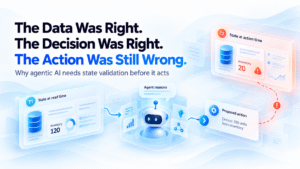
The Data Was Right. The Action Was Wrong.
The Data Was Right. The Decision Was Right. The Action Was Still Wrong. I’ve been thinking about one slightly awkward part of Agentic AI. Not hallucinations. Not prompts. Not whether the model is clever enough. Timing. We’ve spent a lot
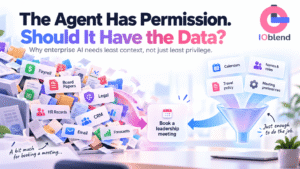
The Agent Has Permission. Should It Have the Data?
Why least privilege may need a companion: least context Here’s a funny thing about enterprise AI. We spend a lot of time talking about what an agent should be allowed to do, but much less time talking about what it
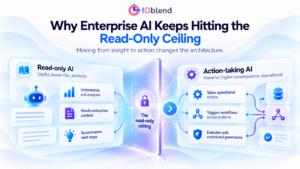
Why Enterprise AI Keeps Hitting the Read-Only Ceiling
The difficult part starts when an agent stops describing the business and starts changing it Enterprise AI has become very good at telling us what it thinks should happen next. It can investigate an incident, review a supplier, classify a
