AW-10865990051

The ERP Shortcut: How to Integrate Faster Than You Think

The ERP Shortcut: How to Integrate Faster Than You Think

In recent months, we’ve tackled an increasing number of ERP implementation projects—upstream, downstream, you name it. Often, we’re brought in as the “firefighters,” rescuing projects that are delayed or going off-track. Why us? We are pretty good at complex, real-time multi-system syncing with ERP platforms in under a week. We’ll dive into how and why we can achieve this further down. But first, let’s explore the common data integration challenges that cause ERP projects to fail.

Why ERP projects often fail

Nine times out of ten, ERP projects run into trouble because development teams hit roadblocks with data integration. Whether it’s legacy or specialised systems, mismatched data formats, complex transformation rules, or siloed information, these challenges are often underestimated at the outset.

Typically, implementing an ERP system takes anywhere from six months to two years. The timeline depends on factors like the organisation’s size, the complexity of its existing systems, and business rules. For a small business, the task might just involve integrating a financial system, CRM, and sales data. Larger enterprises, however, deal with multiple operational systems, departments, and even a proliferation of spreadsheets. Integrating all these into a unified ERP platform is no small feat.

That’s why ERP deployments tend to be expensive and time-consuming, often dragging out even longer when unforeseen complexities arise. But does it have to be this way?

What Is an ERP system?

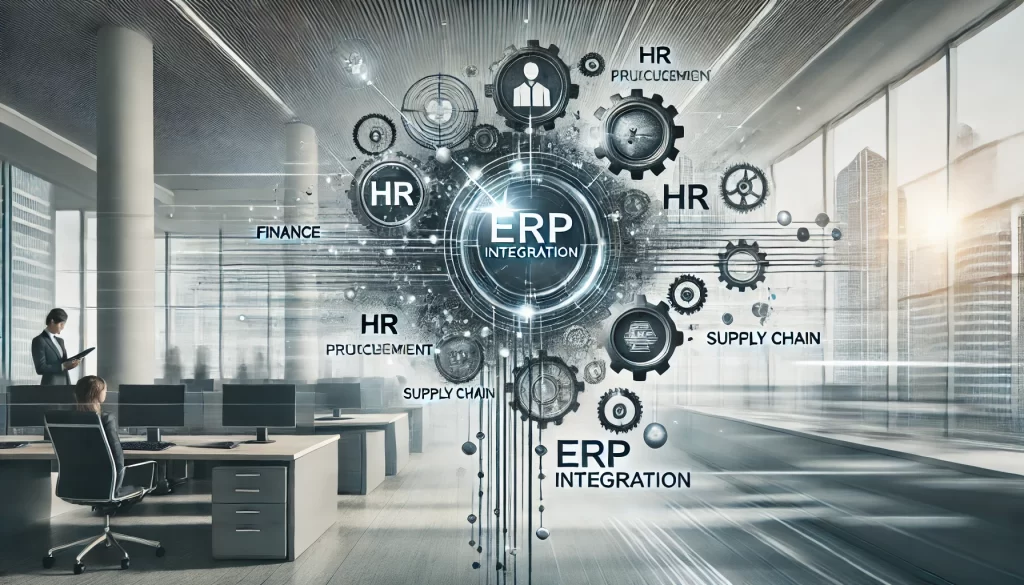
Before diving deeper, let’s quickly revisit the basics. An ERP (Enterprise Resource Planning) system centralises and streamlines core business operations like finance, human resources, procurement, and supply chain management. This unified system allows different departments to work on a single platform, providing a comprehensive, real-time view of the company’s operations and improving decision-making.

The ultimate goal of an ERP system is seamless integration across all departments, allowing information to flow freely and facilitating better coordination. But in practice, reaching that ideal can be somewhat of a challenge.

Top ERP vendors:

The top players have been around for donkey years and you are highly likely to find one in most companies.

  • SAP: Popular for large, complex enterprise-grade solutions.
  • Oracle: Known for robust analytics and database management.
  • Microsoft Dynamics 365: A great choice for small to medium-sized businesses, especially with existing Microsoft tools.
  • NetSuite (Oracle): A versatile cloud-based ERP solution for SMEs.

These established players dominate the market, but emerging cloud-based ERP solutions are increasingly catering to niche industries and specific business needs.

Common ERP Implementation Challenges

No matter the vendor, implementing their ERP system is never straightforward. Whether the business is upgrading the existing system or migrating to a competitor, companies face a variety of challenges that can derail even the best-laid plans. You can find countless ERP horror stories online—while they’re educational, I’ll save you the TL;DR and sum up the key pain points:

High costs and resource demands: The investment in software, training, and personnel goes well beyond software licenses. ERP projects consumed more than they had planned for.

Data quality and migration issues: Migrating data from legacy systems into a new ERP is a complex, time-consuming process. The data wasn’t what they’d expected and took a long time to mend it.

Legacy system integration: Synchronising older systems with modern ERPs is notoriously difficult. Missing documentation, obscure code, unclear business rules.

Customisation requirements: Every business has unique processes that require significant customisation of ERP solutions. Who would have ever thought that your business was so different from the rest?

Change management: Convincing employees to switch from their beloved spreadsheets to a new system always meets resistance. If you invested your career building and managing one, who could blame you?

Why data integration is a major challenge

Data integration is often the Achilles’ heel of any ERP implementation. Most organisations deal with a mix of legacy systems, each with different data formats, structures, and processes. As systems age and business needs evolve, so do data integration demands. At IOblend, we’ve built a whole business around solving this very problem.

Some common challenges we see include: 

  • Disparate data formats: Legacy systems often require significant data transformation efforts.
  • Data silos: Different departments may operate in isolation, making data extraction and integration a nightmare.
  • Data quality issues: Inconsistent or outdated data leads to inaccurate analytics and operational inefficiencies.
  • Real-time data requirements: Modern ERP systems need to sync with IoT devices and supply chain systems in real time, particularly in sectors like. manufacturing.
  • Security and compliance: Safeguarding sensitive data and adhering to regulations such as GDPR adds another layer of complexity

How IOblend simplifies ERP data integration

Now that we’ve outlined the common challenges with ERP implementations, let’s talk about how we help make these projects faster, cheaper, and far less painful.

IOblend was designed with one mission in mind: to simplify data integration. Nothing less, nothing more. It provides everything a data engineer needs to address integration challenges with ease and speed. And I talk about full end-to-end data integration with automated data, technical governance and resource management built in.

IOblend highlights:

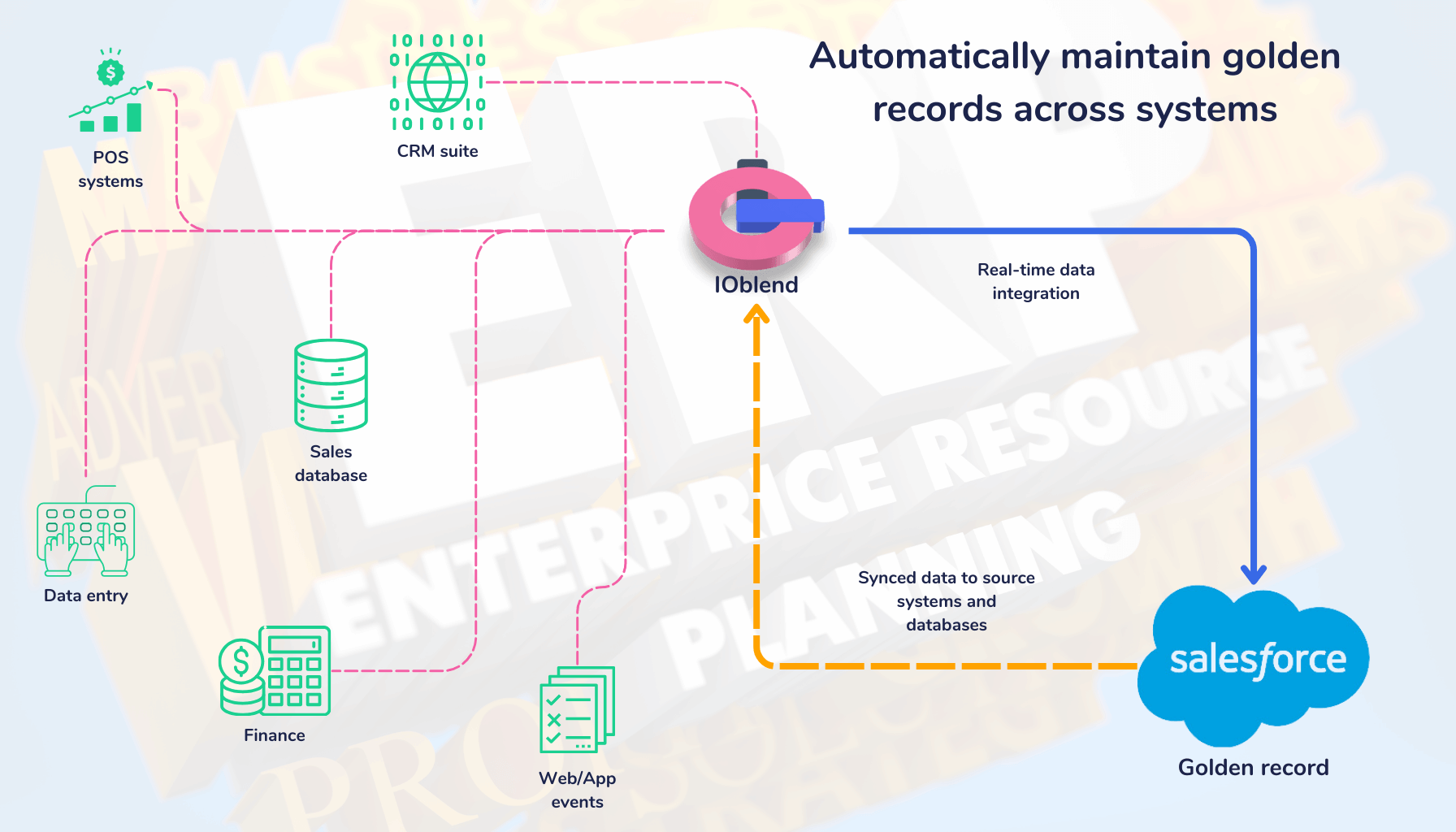
  • Real-time data integration: Whether it’s Salesforce, SAP, or Microsoft Dynamics 365, IOblend enables real-time updates for customer, financial, and transactional data.
  • Code-first and Low/No-Code solutions: You get the best of both worlds—speed and flexibility. You can rapidly create data pipelines without needing custom development, but still retain control over your business logic, stored procedures, APIs, and more.
  • Complex data pipelines: IOblend supports any cloud-based and on-premise data source, making it easy to integrate legacy systems with modern cloud applications.
  • Automated data quality checks: With IOblend, you can ensure that the data entering your ERP is accurate, up-to-date, and trustworthy, with minimal supervision.

If you’re currently facing data integration issues with an ERP project or are in the planning stages, reach out to us. We’ve successfully delivered many ERP integrations, and we can save you time, money, and headaches. Whether you need to integrate a single system or an entire enterprise, we’re here to help.

IOblend presents a ground-breaking approach to IoT and data integration, revolutionizing the way businesses handle their data. It’s an all-in-one data integration accelerator, boasting real-time, production-grade, managed Apache Spark™ data pipelines that can be set up in mere minutes. This facilitates a massive acceleration in data migration projects, whether from on-prem to cloud or between clouds, thanks to its low code/no code development and automated data management and governance.

IOblend also simplifies the integration of streaming and batch data through Kappa architecture, significantly boosting the efficiency of operational analytics and MLOps. Its system enables the robust and cost-effective delivery of both centralized and federated data architectures, with low latency and massively parallelized data processing, capable of handling over 10 million transactions per second. Additionally, IOblend integrates seamlessly with leading cloud services like Snowflake and Microsoft Azure, underscoring its versatility and broad applicability in various data environments.

At its core, IOblend is an end-to-end enterprise data integration solution built with DataOps capability. It stands out as a versatile ETL product for building and managing data estates with high-grade data flows. The platform powers operational analytics and AI initiatives, drastically reducing the costs and development efforts associated with data projects and data science ventures. It’s engineered to connect to any source, perform in-memory transformations of streaming and batch data, and direct the results to any destination with minimal effort.

IOblend’s use cases are diverse and impactful. It streams live data from factories to automated forecasting models and channels data from IoT sensors to real-time monitoring applications, enabling automated decision-making based on live inputs and historical statistics. Additionally, it handles the movement of production-grade streaming and batch data to and from cloud data warehouses and lakes, powers data exchanges, and feeds applications with data that adheres to complex business rules and governance policies.

The platform comprises two core components: the IOblend Designer and the IOblend Engine. The IOblend Designer is a desktop GUI used for designing, building, and testing data pipeline DAGs, producing metadata that describes the data pipelines. The IOblend Engine, the heart of the system, converts this metadata into Spark streaming jobs executed on any Spark cluster. Available in Developer and Enterprise suites, IOblend supports both local and remote engine operations, catering to a wide range of development and operational needs. It also facilitates collaborative development and pipeline versioning, making it a robust tool for modern data management and analytics

Enterpsise-Data-Platform-blog-IOblend
AI
admin

When Enterprise Data Platforms Become Too Complex

When Enterprise Data Platforms Become Too Complex Enterprise data platforms usually start with a sensible goal: Connect the data Make it trustworthy Make it useful The problem is that, over time, the platform itself can become part of the complexity. More services are added. More specialist skills are needed. More workloads become dependent on one

Read More »
Real-Time-Entity-Resolution-for-Enterprise-AI-IOblend
AI
admin

Real-Time Entity Resolution for Enterprise Data and AI

Entity Resolution at Scale: Merge Duplicates as Data Moves Enterprise data rarely arrives clean. The same customer, supplier or product can exist across multiple systems under different names, IDs or formats. For reporting, this creates inconsistency. For AI and automation, it creates unreliable context. Entity resolution has traditionally been handled through batch processing. But when

Read More »
Real-Time-Customer-360-MDM-for-AI-Ready-Data-IOblend
AI
admin

Real-Time Customer 360: MDM for AI-Ready Data

Real-Time Customer 360: MDM That Keeps Data Current A Customer 360 view is only useful if the data behind it is current. Many organisations still rely on batch integration, which means customer profiles can quickly fall behind reality. As businesses adopt AI, copilots and real-time analytics, that gap becomes harder to ignore. Real-time Master Data

Read More »
Migration-QA-at-Scale-Reconciliation-Checksums-and-Audit-Trails
AI
admin

Data Migration QA: Checksums & Audit Trails

Migration QA at Scale: Reconciliation, Checksums, and Audit Trails  📂 Did you know that during enterprise database migrations, as much as 20% of quiet data corruption goes entirely unnoticed until post-cutover operational failures occur?  Understanding migration QA at scale  Migration QA at scale refers to the systematic validation of volume, structure, and integrity when shifting enterprise

Read More »
Lakehouse-Quality-Gates-Fail-Fast-Before-Bad-Data-Lands-IOblend
AI
admin

Lakehouse Data Quality Gates: Stop Bad Data Fast

Lakehouse Quality Gates: Fail Fast Before Bad Data Lands  📋 Did You Know? Up to 20% of real-time event streams suffer from schema drift, duplicate payloads, or corrupted records, costing global organisations billions each year in wasted compute, broken analytical models, and polluted reporting layers.  The Concept: Stopping Bad Data at the Border  Lakehouse Quality Gates are automated,

Read More »
Data-contracts-with-IOblend
AI
admin

Automated Data Contracts: Stop Schema Drift

Data Contracts That Stick: Enforce Schema and Expectations Automatically  📜 Did You Know? In the early days of big data, a single unannounced column type change in an upstream transactional database could trigger a catastrophic “data graveyard” effect, corrupting millions of analytics records before anyone noticed. The Concept of Enforceable Data Contracts  A data contract is

Read More »
Scroll to Top