
Real-time data integration for networks that cannot wait.
IOblend connects telecom network telemetry, OSS/BSS, smart meters, SCADA, billing, customer, asset and IoT data into governed production pipelines. Process high-volume streams alongside transactional and historical data, apply quality and business rules in flight, and deliver current operational context to network monitoring, reliability analytics, forecasting, billing, customer operations and AI without replacing the specialist systems already running the network.
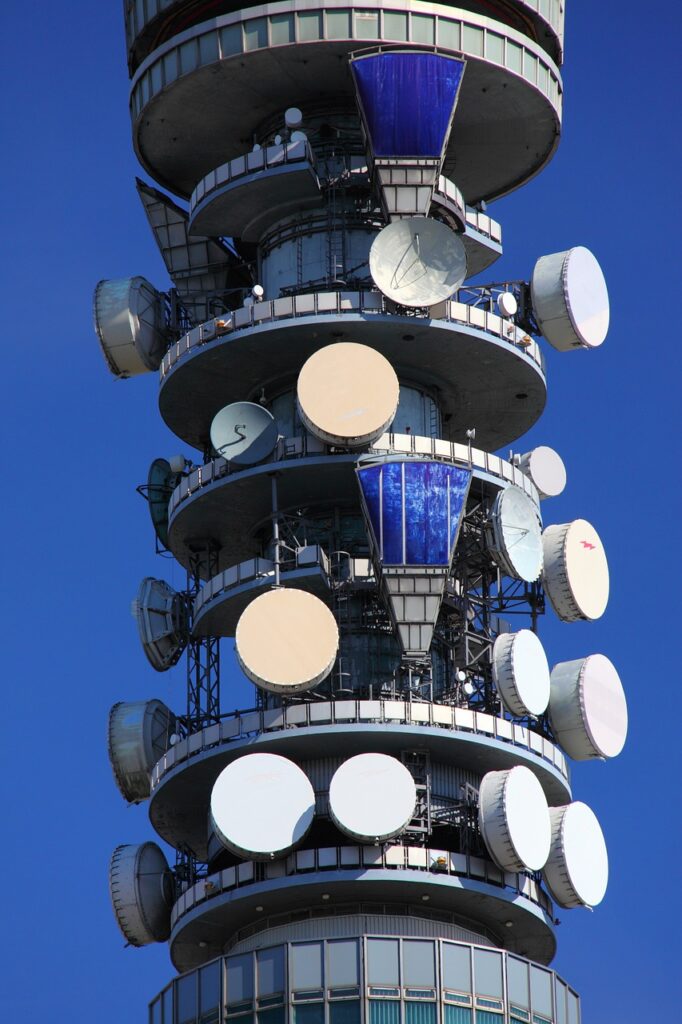
Millions of changing endpoints have to become a trusted operational picture.
Telecoms and utilities operate distributed networks where the physical estate is continuously emitting data. The individual signals are different—network events versus consumption and grid telemetry—but both industries need to combine high-velocity operational data with customer, asset, billing and historical context before the information is useful.
Meter, grid and asset data
Convert smart-meter, SCADA, substation, field-device and asset signals into reliable billing, reliability, demand and maintenance data.
Network, service and subscriber data
Combine network telemetry, service events, OSS/BSS, charging, CRM and customer behaviour into current operational and commercial context.
Turn interval reads into billing accuracy and demand intelligence.
Smart-meter estates transform an occasional meter reading into a continuous interval-data problem. The pipeline has to detect missing periods, correct or isolate invalid readings, combine usage with tariff and customer data, and send the same trusted meter history to both commercial and operational consumers.
Illustrative interval-consumption profile
SCADA tells you what the asset is doing. The wider data estate explains what it means.
SCADA streams are excellent for immediate operational state, but reliability decisions often require maintenance history, asset hierarchy, weather, loading and prior behaviour. IOblend can combine those live and historical sources while the telemetry is moving, then feed current reliability or predictive-maintenance consumers.
Live asset condition
Turn a technical network event into a business-impact decision.
A network alarm has limited value until the operator knows which service, location and subscribers it affects. IOblend correlates live telemetry with service inventory, network topology, OSS/BSS and customer data so technical events reach operations with the business context needed to prioritise action.
Start with the technical event.
Consume alarms, performance counters, network logs or event streams as conditions change.
Resolve what the event belongs to.
Join the signal with topology, inventory, location, service and other network relationships.
Add service and customer context.
Connect the affected infrastructure to subscriber, SLA, account and commercial information.
Route a prioritised incident.
Feed monitoring, field operations, customer communications or downstream AI with a more complete impact picture.
Do more than predict churn. Feed the decision while there is still time to act.
A weekly churn score can already be stale when the subscriber's behaviour is changing quickly. IOblend can maintain fresh behavioural features from network, usage, billing and service data, deliver them to a model and route the resulting risk signal into a governed retention or downstream-action flow.
Five alerts may be one incident. Correlation is what turns telemetry into operations.
Large telecom and utility estates can generate many symptoms from the same underlying failure. IOblend can combine event streams with topology, geography, asset and customer/service context so downstream systems receive a better operational representation than a raw flood of unrelated alarms.
The network cannot stop because one event is malformed.
Telecom and utility data often arrives as an unbounded stream. Duplicate events, retries, schema changes and corrupt records are normal operational realities. IOblend applies stateful deduplication, validation, schema handling and exception isolation while healthy data continues toward its destination.
Live event stream
Illustrative production pattern: healthy records continue while invalid or ambiguous events are isolated for investigation and replay.
Network data estates rarely modernise in one clean technology generation.
Telecoms and utilities often have critical operational systems that cannot be replaced at the same pace as cloud analytics, AI or customer platforms. IOblend can bridge legacy, SaaS, cloud and edge environments so data modernisation can proceed incrementally while operations continue.
Keep interoperability standards in the architecture, and the business logic outside any one vendor.
Telecom and utility systems are built around standards because the networks must interoperate across generations, vendors and domains. IOblend complements those standards by handling the cross-system production dataflow around them: integration, transformation, state, data quality, lineage and routing.
Questions network-data teams ask before connecting operational estates.
These answers focus on the production data layer around distributed telecom and utility networks: telemetry, smart meters, SCADA, OSS/BSS, billing, network events, data quality and real-time analytics.
What does IOblend do for telecoms and utilities?
IOblend provides the production data integration and DataOps layer between network telemetry, operational systems and enterprise consumers. It can combine streaming, batch and Change Data Capture data, transform it in flight, apply quality and lineage controls, maintain state and deliver current trusted data into analytics, AI, billing, customer and operational systems.
Can IOblend process high-volume IoT and network telemetry?
Yes. IOblend is based on Apache Spark and is designed for large-scale streaming and batch processing on customer-controlled infrastructure. It can process IoT, meter, network, device and event data alongside slower-changing enterprise data within the same pipeline model.
How does IOblend support smart meter data integration?
IOblend can ingest interval meter data, validate missing or suspect reads, enrich consumption with meter, customer and tariff context, and route governed outputs into billing, forecasting, lakehouse or analytics environments. Historical and real-time sources can be processed together.
How does IOblend work with SCADA data?
SCADA telemetry can be ingested through the connectivity available in the utility architecture and combined with asset, maintenance, weather or historical data. IOblend handles the wider transformation, state, quality and routing required to turn raw operational signals into reliability or analytical context.
Can IOblend connect telecom OSS and BSS systems?
Yes, where the platforms expose supported APIs, databases, event feeds, files or other interfaces. IOblend can combine network and service data with charging, billing, CRM and subscriber information while keeping transformation and quality logic independent of the individual application vendor.
How can IOblend improve network incident analytics?
IOblend can correlate technical events with topology, geography, service inventory, asset and customer context. This allows downstream monitoring or automation to understand not only that an alarm occurred, but what service, asset or subscriber population it may affect.
Does IOblend support telecom churn use cases?
Yes. Current usage, service, billing and interaction data can be transformed into fresh governed features for a churn model. The model output can then enter a controlled downstream workflow, including APIs, CRM actions or agents, with feedback data captured for later analysis.
How does IOblend handle duplicate or malformed network events?
IOblend supports stateful deduplication, idempotent processing, schema controls, quality checks and exception quarantine. Valid events can continue while problem records retain the source and transformation context needed for investigation and replay.
Can IOblend run at the edge as well as in the cloud?
IOblend is designed for customer-controlled cloud, on-premises, hybrid and edge-oriented deployments. Processing can be placed according to latency, network bandwidth, data sovereignty and operational requirements while retaining portable pipeline logic.
Does IOblend replace a meter-data platform, SCADA system, OSS/BSS or network-management platform?
No. Those specialist platforms continue to perform their operational roles. IOblend connects the data between them and downstream enterprise systems, adding transformation, state, quality, lineage, synchronisation and reusable production-data logic.
How does IOblend fit with industry standards such as TM Forum APIs, DLMS/COSEM or IEC 61850?
Industry standards define interoperable interfaces, information models or protocols. IOblend operates at the production dataflow layer around those standards: consuming available data, applying enterprise rules and governance, and delivering the resulting context to the systems that need it.
When is IOblend a strong fit for a telecom or utility?
IOblend is a strong fit when network data is fragmented across operational and enterprise systems, event volumes are high, real-time data needs historical or customer context, and teams are maintaining too much custom integration code between network, billing, analytics, AI and cloud platforms.
Bring us the event stream, the network context and the system that needs the answer.
We can map the telemetry, customer or asset context, latency requirement, data-quality rules and downstream actions—then turn them into a reusable production data pattern across your telecom or utility estate.