
AW-10865990051
IOblend for Data Architects

Enterprise data architecture that stays flexible. One production layer across the estate.

IOblend is an independent enterprise data integration and DataOps layer for data architects designing cloud, on-premises, hybrid and multi-platform data architectures. It connects operational systems, databases, SaaS applications, APIs, events and legacy technology through batch, Change Data Capture and real-time streaming, while applying transformation, data quality, lineage, schema, state and exception controls inside the production flow.

Use IOblend to reduce point-to-point integration, modernise legacy data architecture, synchronise systems during migration, and deliver trusted production data into Microsoft Fabric, Databricks, Snowflake, analytics, AI and operational applications without forcing the enterprise onto one data platform.

Keep the stack Integrate Fabric, Databricks, Snowflake, ERP, CRM and legacy systems.
Standardise production Batch, CDC and streaming with common quality, lineage and control.
Preserve architecture choice Run in customer-controlled cloud, on-premises or hybrid infrastructure.
enterprise data architecture · production flow
01
Operational + legacy estate

SAP, Salesforce, Oracle, transactional databases, APIs, files, events and specialist systems remain systems of record.

IO
IOblend production data layer

Connect, transform, validate, govern, synchronise, reconcile and maintain state through reusable Apache Spark pipelines.

03
Strategic platforms + business use

Deliver trusted data into Fabric, Databricks, Snowflake, analytics, AI, applications and operational decisioning.

Batchhistory
CDCchange
Streaminglive data
DataOpstrust
What the architecture gains

A cleaner production layer between systems and platforms.

IOblend gives architects a consistent way to move, transform and govern data across a mixed enterprise estate. The result is less point-to-point integration, clearer platform boundaries and more freedom to modernise without rebuilding the entire data flow.

01 · Architecture

Preserve platform choice

Keep strategic platforms focused on their strengths while the integration layer remains independent.

02 · Integration

Reduce repeated plumbing

Reuse common connectivity, transformation, quality and lineage patterns across the estate.

03 · Governance

Control data in motion

Apply schema, validation, lineage and exception handling before data reaches downstream consumers.

04 · Modernisation

Change the estate incrementally

Synchronise legacy and target environments so migration can be proven before cutover.

The data architect agenda

Architecture should reduce dependency, not move it somewhere else.

A modern data architect has to support AI, analytics, operational data, governance and modernisation at the same time. The goal is not to force every workload onto one platform. It is to create an estate that is easier to integrate, govern and change as business requirements evolve.

01 · Simplicity

Reduce integration sprawl

Standardise repeated movement, transformation, quality and lineage patterns instead of adding another bespoke integration for every source, target or project.

Outcome: fewer architectural dependencies
02 · Choice

Protect platform optionality

Keep Microsoft Fabric, Databricks, Snowflake and specialist systems focused on the workloads they do best without tying the entire upstream estate to one destination.

Outcome: change platforms without rebuilding everything
03 · Latency

Support multiple data speeds

Use batch for history, Change Data Capture for database change and streaming for live events while keeping one production approach to transformation and control.

Outcome: one model across batch, CDC and streaming
04 · Trust

Govern data while it moves

Apply schema expectations, validation, lineage and exception handling inside the production flow so trusted data is created before it reaches analytics, AI or applications.

Outcome: governance evidence closer to the source
05 · Change

Modernise incrementally

Synchronise legacy and target environments while migration, reconciliation and business validation continue, rather than making modernisation depend on a single high-risk cutover.

Outcome: lower-risk architecture change
06 · Reuse

Design once, reuse often

Turn recurring connectivity, transformation and quality logic into reusable production playbooks so each new requirement does not begin with a blank integration project.

Outcome: more delivery capacity from the same team
Architect answer

IOblend gives data architects a reusable production layer between enterprise systems and strategic data platforms. That keeps platform boundaries clearer, reduces repeated integration logic and gives the organisation more freedom to evolve the estate over time.

Architecture becomes executable

Turn architecture patterns into reusable production pipelines.

The IOblend Designer combines visual development with SQL and Python. Pipeline intent is stored in reusable playbooks and executed by the IOblend Engine on Apache Spark inside customer-controlled infrastructure.
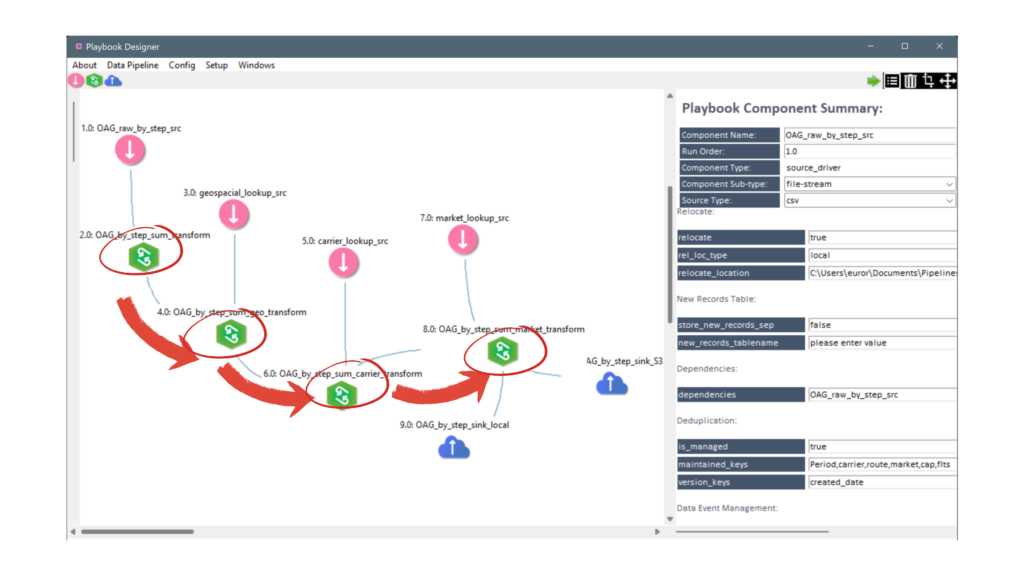
Portable pipeline intentKeep logic less dependent on one target platform.
Reusable componentsStandardise repeated enterprise integration patterns.
Visual + codeCombine visible architecture with SQL and Python control.
Integrated DataOpsTesting, quality, lineage and versioning in the lifecycle.
IOblend modular enterprise data pipeline with reusable sources, transformations and destinations
IOblend modular production pipeline. Reusable source, transformation and delivery components in one production flow.
Support the topology the business needs

Centralised, federated, hybrid and real-time patterns can share the same production discipline.

A modern enterprise rarely has one topology or one latency requirement. IOblend lets architects standardise production integration without prescribing one physical data architecture.

Centralised

Shared analytical platform

Feed a common warehouse or lakehouse while keeping validation, lineage and transformation consistent upstream.

Common controls →
Federated

Domain-owned data

Reuse common production integration controls while domains retain ownership of data products and platform choices.

Federated delivery →
Hybrid

Cloud + on-premises

Move and synchronise data across infrastructure boundaries while execution remains customer controlled.

Hybrid architecture →
Operational

Real-time + event driven

Combine live signals, CDC and enterprise context where latency changes the value of the decision.

Real-time data →
Modernisation

Legacy + target coexistence

Synchronise environments while migration, validation and business proving continue in parallel.

Incremental change →
Multi-platform

Best tool for each workload

Keep strategic platforms focused on their strengths without rebuilding upstream integration every time the architecture changes.

Preserve choice →
Governance in the production path

Make governance part of the dataflow, not an audit after the fact.

IOblend applies data contracts, validation, transformation, metadata, lineage and exception handling while data is moving. That gives architects a clearer production control model and creates governance evidence closer to the point where data changes, fails or reaches downstream consumers.

01 · Contract

Define what good data should look like

Set expected schema, structure and quality requirements before downstream systems consume the data.

02 · Validate

Check data while it is moving

Apply rules, constraints and quality tests in the production path instead of detecting every problem downstream.

03 · Transform

Apply governed business logic

Use SQL, Python and reusable pipeline logic while retaining the context required to understand what changed.

04 · Trace

Carry lineage through the flow

Preserve source and transformation context so architects, engineers and consumers can understand provenance.

05 · Isolate

Quarantine exceptions with evidence

Separate problematic records with the context needed to investigate them without unnecessarily blocking healthy data.

Data quality

Non-breaking quality controls

Design production flows so bad records can be isolated where appropriate instead of converting every exception into a pipeline-wide outage.

Lineage

Record-level evidence

Carry source, transformation and quality context through the pipeline so downstream consumers have clearer evidence of where data came from and what happened to it.

Operations

Exceptions that are easier to investigate

Keep failures visible with relevant pipeline and data context, reducing the time spent reconstructing what happened after an incident.

Architect answer

IOblend turns governance requirements into production controls. Instead of treating quality, lineage and exception handling as separate downstream activities, the same production layer can apply them as data moves across the enterprise architecture.

Modernise without one high-risk cutover

Use synchronisation as the bridge between legacy architecture and the target state.

IOblend supports controlled data modernisation by keeping legacy and target systems aligned while migration is still in progress. Move history, capture ongoing database change, reconcile results and run environments in parallel until the organisation has enough evidence to cut over with confidence.

01

Move the historical estate

Bulk-load historical data and apply the transformation, mapping or cleanup rules required by the target architecture.

02

Keep the target current with CDC

Capture ongoing source-system change so the new environment stays aligned while migration, testing and validation continue.

03

Reconcile old and new

Compare counts, checksums, transformed values and business rules so the organisation has evidence that the target is behaving as expected.

04

Cut over when the evidence is ready

Run environments in parallel where needed, prove operational reliability and decommission legacy components only when the business is ready.
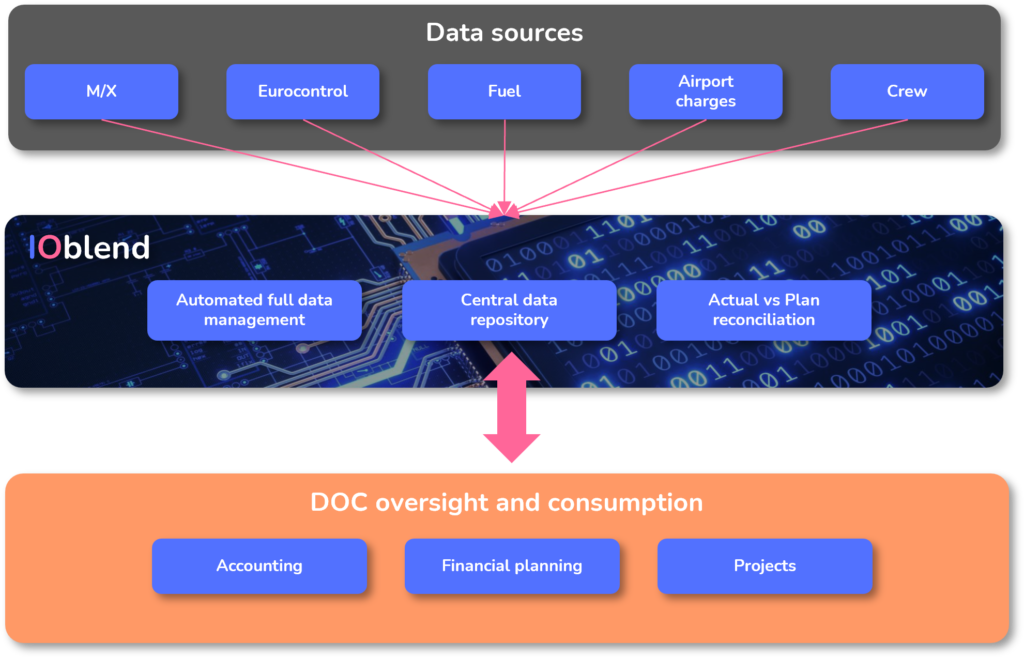
IOblend DataOps architecture providing a common production layer during enterprise data modernisation
Modernisation architecture Use a common production layer while legacy and target systems coexist. The integration and DataOps layer provides a controlled path for movement, synchronisation, validation and reconciliation while the target platform is being proven.
Historybulk migration
ChangeCDC + sync
Evidencereconciliation
Architect answer

IOblend allows modernisation to be staged rather than treated as a single replacement event. Architects can keep old and new systems synchronised, validate the target architecture under real operating conditions and reduce the amount of organisational risk concentrated into the final cutover.

Platform coexistence

Keep strategic platforms focused on the workloads they do best.

IOblend is not another warehouse, lakehouse or AI platform. It provides the production data integration and DataOps layer between enterprise systems and strategic platforms, allowing architects to keep the estate flexible without duplicating integration logic in every destination.

Independent production layer

IOblend standardises the work between systems.

Connect operational and legacy systems, apply transformation and production controls once, then deliver trusted data into the platform that best fits each workload.

ConnectERP, CRM, DB, API
Processbatch, CDC, streaming
Governquality, lineage, state
Deliveranalytics, AI, apps
Microsoft Fabric

Analytics, lakehouse, BI and AI

Fabric provides a broad Microsoft data and analytics environment for storage, engineering, BI and AI workloads.

IOblend adds Reusable upstream integration, CDC, streaming and production controls across operational and legacy systems.
Databricks

Lakehouse, engineering and data intelligence

Databricks provides a powerful environment for analytical engineering, lakehouse workloads and AI.

IOblend adds An independent production layer across hybrid, operational and legacy sources before data reaches the lakehouse.
Snowflake

Data cloud and governed consumption

Snowflake provides a strong environment for analytical data, data sharing and governed downstream consumption.

IOblend adds Source-side integration, synchronisation, transformation and quality controls that remain reusable beyond one target.
Hybrid estate Cloud + on-premises Keep production integration consistent across infrastructure boundaries.
Real-time CDC + streaming Support live operational data without making every source platform-specific.
Modernisation Legacy coexistence Synchronise old and new systems while target platforms are being proven.
Architecture Preserve optionality Change platforms or workloads without rebuilding the whole integration estate.
Best architectural fit

Use IOblend when the difficult problem sits between systems.

Multi-platform estates, hybrid infrastructure, legacy modernisation, real-time requirements and repeated point-to-point integration are where an independent production layer provides the most architectural value.

Architectural proof points

The production model should make future change cheaper, not harder.

Architectural flexibility comes from how production logic is built and operated. IOblend combines portable playbooks, customer-controlled execution and built-in engineering controls so the estate can evolve without starting every integration from zero.

Portability

Reusable pipeline playbooks

Represent production flow as reusable metadata plus SQL and Python rather than burying all upstream logic inside one destination platform.

How it works →
Control

Customer-controlled infrastructure

Run in cloud, on-premises or hybrid environments without moving production data into an IOblend-hosted SaaS platform.

Product overview →
DataOps

Production controls built in

Testing, debugging, quality, lineage, exception handling and pipeline versioning are part of the engineering lifecycle rather than separate projects.

Documentation →
Data Architect FAQ

Common architecture questions about IOblend.

These answers cover IOblend’s role in enterprise data architecture, how it works alongside strategic data platforms, where it runs, and how it supports integration, governance, real-time data and legacy modernisation.

Enterprise architecture Hybrid data CDC + streaming Governance Modernisation Platform coexistence
Architectural scope

IOblend is an independent production data integration and DataOps layer. It is designed to connect and govern data across the enterprise estate rather than replace the platforms used for storage, analytics, BI or AI.

What is IOblend for a data architect?

IOblend is an independent production data integration and DataOps layer. It connects heterogeneous enterprise systems using batch, Change Data Capture and streaming while applying transformation, data quality, lineage, state and exception controls.

Does IOblend replace Microsoft Fabric, Databricks or Snowflake?

No. IOblend complements strategic platforms by handling production data movement, transformation, synchronisation and governance across operational systems, legacy technology, databases, APIs and event streams.

Can IOblend support hybrid and federated data architecture?

Yes. IOblend can run in customer-controlled cloud, on-premises and hybrid environments and can move data across centralised or federated estates without requiring every workload to use one common storage platform.

How does IOblend reduce architectural lock-in?

Pipeline logic can be expressed through reusable metadata, SQL and Python and executed on Apache Spark across customer-controlled infrastructure. This helps keep upstream integration logic less dependent on one destination platform.

Can batch, Change Data Capture and streaming be handled together?

Yes. IOblend supports batch, CDC and streaming within the same production environment, including transformation, state management, quality controls, lineage and downstream delivery.

How does IOblend support data governance?

Data contracts, validation, exception quarantine, metadata and record-level lineage can be applied within the production flow so governance evidence is created close to the point where data changes and moves between systems.

How does IOblend support legacy modernisation?

IOblend can move historical data, maintain a CDC tail, keep legacy and target environments synchronised, reconcile results and support parallel running until the organisation is ready to cut over.

Where does IOblend run?

IOblend is designed to run in customer-controlled infrastructure, including cloud, on-premises and hybrid environments.

Start with the estate you already own

Bring the architecture diagram you want to simplify.

We can map the systems, platform boundaries, data movement, latency requirements and governance controls with you. From there, we can show where IOblend can reduce repeated integration work, improve production control and preserve the parts of the architecture that should stay.

No forced platform replacement Keep strategic systems and platforms that already work.
Focus on production data flow Integration, CDC, streaming, transformation, quality and lineage.
Design for future change Reduce coupling so architecture can evolve more safely.
Scroll to Top