AW-10865990051
Manufacturing data integration · IIoT · operational analytics

Manufacturing data integration for live factory operations.

IOblend connects machine telemetry, IoT sensors, MES, SCADA, ERP, quality systems and cloud platforms into governed production data pipelines. Combine live plant signals with historical and business data, transform and validate information in flight, and deliver trusted manufacturing context to operational analytics, predictive maintenance, quality, digital twins and AI without forcing the factory to replace the systems already running production.

industrial data integration IIoT data pipelines OT / IT integration predictive maintenance manufacturing analytics digital twins quality intelligence
Manufacturing technician on a connected production line
LIVE PLANT SIGNALS streaming + batch in one production layer
Vibrationmachine condition
Cycle timeline performance
Qualitydefects + tolerance
Inventorymaterials + WIP
OT + IT data convergence

The factory already has the data. The problem is that it lives at different speeds.

Manufacturing data integration connects operational technology on the shop floor with enterprise IT systems and analytical platforms. Machine signals may arrive several times a second while ERP, maintenance and quality records change on transactional or batch cycles. Production intelligence depends on joining those timeframes without losing the meaning of either.

OTPLC / machinestatus · counters · cycle · alarms
TelemetryIoT sensorstemperature · pressure · vibration · energy
OperationsMES / SCADAproduction · recipe · line · process state
EnterpriseERPorders · materials · finance · inventory
QualityQMS / visioninspection · defects · tolerance · images
MaintenanceCMMS / EAMassets · work orders · service history
Manufacturing insight appears at the intersection. A vibration spike becomes more useful when the pipeline also knows the asset, product being made, operating state, last maintenance event and current production schedule.
Manufacturing data architecture

Make the production line part of the enterprise data estate.

IOblend provides the independent production layer between factory sources and the systems that need trusted manufacturing data. Logic can run close to the plant, in the customer cloud or across a hybrid deployment while the same governed pipeline model is retained.

IOblendtransform · quality · state · lineage · route
Machine telemetryPLC · sensors · controllers
MES / SCADAproduction execution + process state
ERP / inventoryorders · materials · stock
Quality systemsQMS · inspection · vision AI
MaintenanceEAM · CMMS · asset history
Analytics + AIOEE · forecasting · digital twin · models
The objective is not to replace PLCs, MES, SCADA or ERP. IOblend makes the data usable across those boundaries so plant and enterprise systems can share current operational context.
Edge-to-enterprise manufacturing data

Process close to the machine. Share what matters across the business.

High-frequency plant signals do not all need to travel unchanged into the cloud. Manufacturing pipelines can transform, filter, aggregate and validate data close to operations, then deliver the useful context to enterprise platforms, analytics and AI.

Plant / edgeCapture operational signalsPLC, machine, sensor and local process data enter the governed flow.
Production data layerTransform data in motionNormalise, filter, enrich, maintain state and apply quality rules before unnecessary volume moves upstream.
EnterpriseDeliver business-ready contextSend trusted data to analytics, AI, inventory, forecasting, lakehouse or operational applications.
Operational analyticsMonitor throughput, downtime, scrap, energy and line state while production is active.
Cross-plant visibilityStandardise signals from different factories into comparable production metrics.
ForecastingCombine current production output with orders, inventory and historical patterns.
Automated actionFeed alerts, models and operational applications without waiting for a central batch cycle.
Predictive maintenance data pipelines

Move from “machine failed” to “condition is drifting”.

Predictive maintenance depends on a continuous view of equipment condition. IOblend can normalise live sensor data, calculate moving or stateful features, combine them with maintenance history and feed current features directly into analytical or inference models.

Normalise sensor driftCorrect or contextualise changing sensor behaviour before it becomes a false maintenance signal.
Combine live + historical stateJoin current telemetry with asset history, service events, thresholds and operating conditions.
Handle out-of-order eventsKeep calculations correct when industrial data arrives late or does not follow perfect event order.
Feed inference continuouslyDeliver fresh governed features to predictive models rather than waiting for the next batch preparation cycle.
Read the predictive-maintenance deep dive →

Condition signal

normaldriftattention
Vibrationrolling RMS / frequency features
Temperaturebaseline + deviation
Loadoperating-state context
Illustrative condition-monitoring visual. Maintenance thresholds and model logic should be defined for the specific asset and operating environment.
Manufacturing quality inspector on a factory production floor
Real-time manufacturing quality

Bring process data, legacy quality records and AI inspection into the same decision path.

Modern quality control can combine structured production history with high-volume inspection data, including outputs from vision systems or Agentic AI. IOblend can harmonise those inputs in one governed flow, enrich them with product and process context, validate the result and route the production record according to the quality outcome.

Passvalidated production record continues automatically
Reviewambiguous result routed to quality or engineering review
Quarantinefailed record isolated with lineage and defect context
Read the manufacturing quality-control deep dive →
Published manufacturing outcome

Seventeen factories moved from weekly hindsight to live operational data.

An IOblend manufacturing customer had advanced machinery capable of generating real-time data, but central legacy processes reduced that information to manual CSV extracts sent to headquarters once a week. The data was already at least a week old when central teams received it.

17factories connected across several countries
8 months → 3 weeksoriginal implementation estimate reduced to the reported IOblend delivery timeframe
Weekly → livemanual machine-data extracts replaced by real-time production data flows
7-figureefficiency gain reported by the manufacturing customer

Multi-plant data becomes one operational view

IOblend was installed in the customer's Azure environment behind its security boundary and connected the factories to analytics, forecasting and inventory-management consumers.

Why this matters: the business problem was not a lack of machine data. The factories already produced it. The value came from automating the production data path so central teams could act while inventory, downtime and quality conditions were still current.
Digital twin data foundations

A digital twin stays useful only while the physical plant and the data model stay synchronised.

Digital twins depend on a continuous stream of operational state from sensors, machines, MES, ERP and maintenance systems. IOblend can prepare, validate and synchronise those data flows so the virtual representation reflects the changing factory rather than becoming another delayed reporting model.

Live asset stateFeed machine condition, line state, throughput and process variables continuously.
Enterprise contextAdd orders, materials, maintenance history and quality information to physical telemetry.
AI / model inputsGenerate fresh governed features for simulation, forecasting and prescriptive decisioning.
Schema evolutionAdapt as sensors, firmware and plant data structures change over the asset lifecycle.
Read the digital-twin deep dive →
PHYSICAL PLANTDIGITAL MODEL
live operational state
synchronised virtual state
Illustrative digital-twin data pattern. IOblend supplies and governs the production data flow; the simulation or digital-twin application remains the chosen specialist platform.
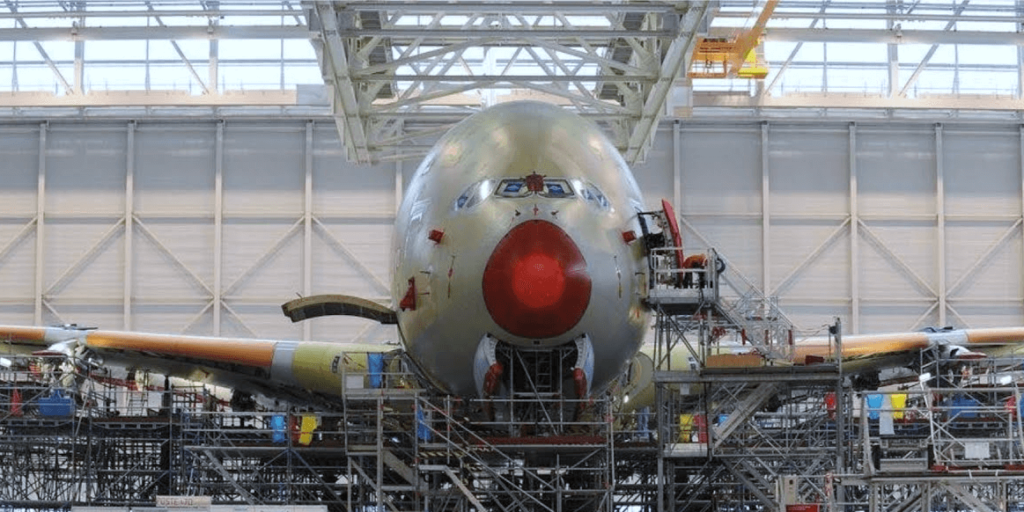
Large-scale manufacturing facility with a complex production assembly environment
Beyond the machine

Production efficiency depends on the material, order and supply data around the line as well.

Manufacturing performance is not isolated to equipment telemetry. Orders, inventory, supplier status, work in progress, quality outcomes and logistics all shape what the plant can produce and when. IOblend can join operational factory signals with those enterprise datasets so production analytics has the wider business context.

Inventory + WIPAlign material availability with current production state and consumption.
Orders + planningCompare actual plant output with order demand, schedule and forecast.
Supplier contextAdd lead times, material quality and availability into operational analysis.
Plant-to-enterprise metricsStandardise production data so central teams can compare lines and factories consistently.
Read the manufacturing-data article →
Industrial technology context

Work with the standards and platforms already present from shop floor to cloud.

Manufacturing estates are heterogeneous by design. IOblend sits above the available connectivity layer and applies reusable transformation, quality, lineage and business logic without requiring the factory to standardise every plant around one industrial or cloud vendor.

OPC UA explicitly spans sensors, control systems, MES, ERP and IIoT, while major industrial platforms increasingly bridge shop-floor data with cloud and enterprise systems. IOblend provides the independent production-data logic between those environments.
Manufacturing data integration FAQ

Questions manufacturing data and technology teams ask before connecting the plant.

These answers focus on the production-data layer between OT and IT: machine telemetry, MES, SCADA, ERP, predictive maintenance, quality, edge deployment and how IOblend fits without replacing specialist manufacturing systems.

manufacturing data integrationindustrial IoTOT / IT integrationmanufacturing analyticspredictive maintenancefactory data pipelines
What is manufacturing data integration?

Manufacturing data integration connects shop-floor operational data with enterprise systems, analytics and AI. It brings together sources such as PLCs, IoT sensors, MES, SCADA, ERP, quality systems and maintenance platforms so current production context can be transformed, governed and used across the business.

How does IOblend connect OT and IT data?

IOblend provides a production data layer between plant sources and enterprise consumers. Data can enter through supported database, streaming, file, API or other interfaces, be transformed and validated in flight, and then be delivered to analytics, applications, cloud platforms or AI workloads.

Can IOblend process real-time machine and IoT data?

Yes. IOblend supports real-time streaming data alongside batch and Change Data Capture. Machine telemetry can be processed in memory, enriched with historical or enterprise context, checked for quality and delivered to operational analytics or downstream decision systems.

How does IOblend support predictive maintenance?

IOblend can generate current predictive-maintenance features from sensor streams, including rolling statistics and stateful calculations, and combine them with maintenance history or other reference data. Those governed features can then feed the organisation's chosen analytical or inference model.

Can IOblend handle late or out-of-order sensor data?

Yes. Stateful stream-processing patterns can use event time and windows so manufacturing calculations do not assume every record arrives in perfect order. The required tolerance depends on the operational decision and the characteristics of the source system.

How can IOblend support manufacturing quality control?

Quality data from QMS platforms, production systems, sensors and vision or AI inspection can be combined in one pipeline. IOblend can enrich the inspection result with product and process context, validate it, and route accepted, failed or uncertain records through different governed paths.

Does IOblend replace MES, SCADA, ERP or a digital-twin platform?

No. These remain specialist operational or analytical systems. IOblend focuses on making data usable between them: integration, transformation, state, quality, lineage and delivery. A digital twin, MES or ERP can continue doing its specialist job while receiving current governed data from the wider estate.

Can IOblend run at the edge or inside the manufacturer's environment?

IOblend is designed for customer-controlled cloud, on-premises, hybrid and edge-oriented architectures. Pipeline execution is based on compatible Apache Spark infrastructure, allowing organisations to place processing according to latency, data-volume, security and operational requirements.

How does IOblend handle manufacturing data quality?

Schema validation, business rules and quality checks can be applied as data moves. Invalid records can be isolated while healthy production data continues, and record-level lineage preserves the source and transformation context needed for investigation.

Can one IOblend architecture support multiple factories?

Yes. Common pipeline logic can be reused across plants while site-specific connections, mappings and exceptions are parameterised. IOblend's published manufacturing example connected seventeen factories and replaced weekly manual extracts with real-time data flows.

How does IOblend fit with OPC UA and industrial IoT platforms?

OPC UA, industrial gateways and cloud IoT platforms can provide connectivity and device or asset services. IOblend sits in the wider production-data architecture, applying cross-system transformation, quality, state, lineage and routing before manufacturing data reaches enterprise consumers.

When is IOblend a strong fit for manufacturing?

IOblend is a strong fit when plant data is fragmented across machines, plants and enterprise systems; when real-time data must be combined with historical or transactional context; or when predictive maintenance, quality, operational analytics and AI are being slowed by custom data engineering between OT and IT.


Connect the factory data you already generate

Bring us one plant, one problem and the systems that hold the missing context.

We can map the sources, signal frequency, edge requirements, enterprise context, quality rules and decision endpoints—then turn them into a repeatable manufacturing data pattern that can scale from one line to multiple factories.

Scroll to Top