
Streaming Deduplication for Exactly-Once Outcomes
Deduplicate Streaming Events: Exact-Once Outcomes in Real Life 📋 Did you know? In high-velocity streaming environments, network retries and transient worker failures cause up to 20% of event streams to contain duplicate payloads. Understanding exact-once outcomes In real-time data engineering, achieving “exactly-once” outcomes does not mean a message is transported across the wire only once, distributed
Visual Debugging for Apache Spark Streams
Debug Streaming Like a Pro: Visual Tracing and Rapid Iteration 📎 Did you know? The vast majority of real-time streaming data pipeline bugs only reveal themselves under production workloads, usually at 03:00 am. Because streaming systems process unbounded data in memory, traditional breakpoints and step-through debugging are impossible without stopping the entire world, corrupting states, and
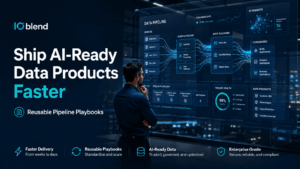
Ship AI-Ready Data Products Faster
Build a “Data Product” in Days: Reusable Pipeline Playbooks 📝 Did you know? According to industry research, over 75% of the enterprise data budget is swallowed by repetitive data integration tasks. Rather than delivering high-value analytical models, engineers spend the majority of their time building the same structural boilerplate over and over again. What are reusable
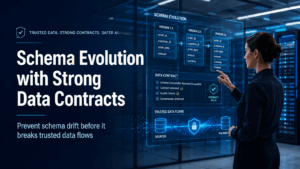
Schema Evolution with Strong Data Contracts
Schema Evolution Without Chaos: Strong Data Contracts Enforced In Pipelines 📋 Did you know? In the early days of big data, a single altered column in a production database could trigger a catastrophic “data graveyard” effect. The Concept of Schema Evolution Schema evolution is the ability of a data platform to gracefully adapt to structural changes
Mainframe to Cloud: Data Migration with CDC
Mainframe to Cloud: A Practical Data Migration Playbook 💾 Did you know? An alarming 83% of data migrations fail outright or drastically overrun their budgets. Shifting Mainframe Heavyweights to the Cloud Mainframe-to-cloud data migration is the process of moving core legacy data assets, often stored in rigid formats like DB2, VSAM, or IMS, into modern cloud
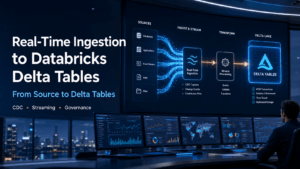
Real-Time CDC to Databricks Delta Tables
Realtime Ingestion to Databricks: From Source to Delta Tables 💽 Did you know? According to industry surveys, nearly eighty per cent of an enterprise’s data budget is consumed purely by data integration and upfront data wrangling rather than actual analytics. Defining real-time ingestion Real-time ingestion to Databricks represents the technical evolution from rigid scheduled batch processing

When Enterprise Data Platforms Become Too Complex
When Enterprise Data Platforms Become Too Complex Enterprise data platforms usually start with a sensible goal: Connect the data Make it trustworthy Make it useful The problem is that, over time, the platform itself can become part of the complexity. More services are added. More specialist skills are needed. More workloads become dependent on one
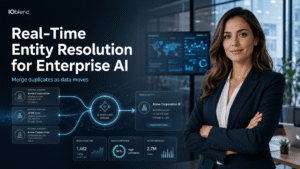
Real-Time Entity Resolution for Enterprise Data and AI
Entity Resolution at Scale: Merge Duplicates as Data Moves Enterprise data rarely arrives clean. The same customer, supplier or product can exist across multiple systems under different names, IDs or formats. For reporting, this creates inconsistency. For AI and automation, it creates unreliable context. Entity resolution has traditionally been handled through batch processing. But when

Real-Time Customer 360: MDM for AI-Ready Data
Real-Time Customer 360: MDM That Keeps Data Current A Customer 360 view is only useful if the data behind it is current. Many organisations still rely on batch integration, which means customer profiles can quickly fall behind reality. As businesses adopt AI, copilots and real-time analytics, that gap becomes harder to ignore. Real-time Master Data
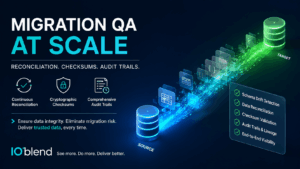
Data Migration QA: Checksums & Audit Trails
Migration QA at Scale: Reconciliation, Checksums, and Audit Trails 📂 Did you know that during enterprise database migrations, as much as 20% of quiet data corruption goes entirely unnoticed until post-cutover operational failures occur? Understanding migration QA at scale Migration QA at scale refers to the systematic validation of volume, structure, and integrity when shifting enterprise
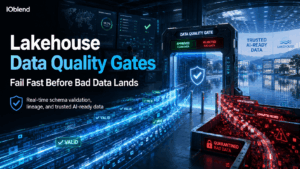
Lakehouse Data Quality Gates: Stop Bad Data Fast
Lakehouse Quality Gates: Fail Fast Before Bad Data Lands 📋 Did You Know? Up to 20% of real-time event streams suffer from schema drift, duplicate payloads, or corrupted records, costing global organisations billions each year in wasted compute, broken analytical models, and polluted reporting layers. The Concept: Stopping Bad Data at the Border Lakehouse Quality Gates are automated,
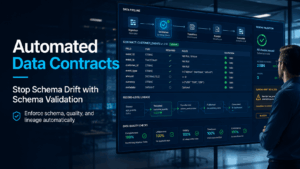
Automated Data Contracts: Stop Schema Drift
Data Contracts That Stick: Enforce Schema and Expectations Automatically 📜 Did You Know? In the early days of big data, a single unannounced column type change in an upstream transactional database could trigger a catastrophic “data graveyard” effect, corrupting millions of analytics records before anyone noticed. The Concept of Enforceable Data Contracts A data contract is
