

Compliance-Friendly DataOps: Repeatable, Reviewable, Versioned Pipelines
📓 Did you know? According to industry compliance reports, nearly 70% of businesses face difficulties tracing their data back to its raw origins during regular regulatory audits.
The Concept of Compliance-Friendly DataOps
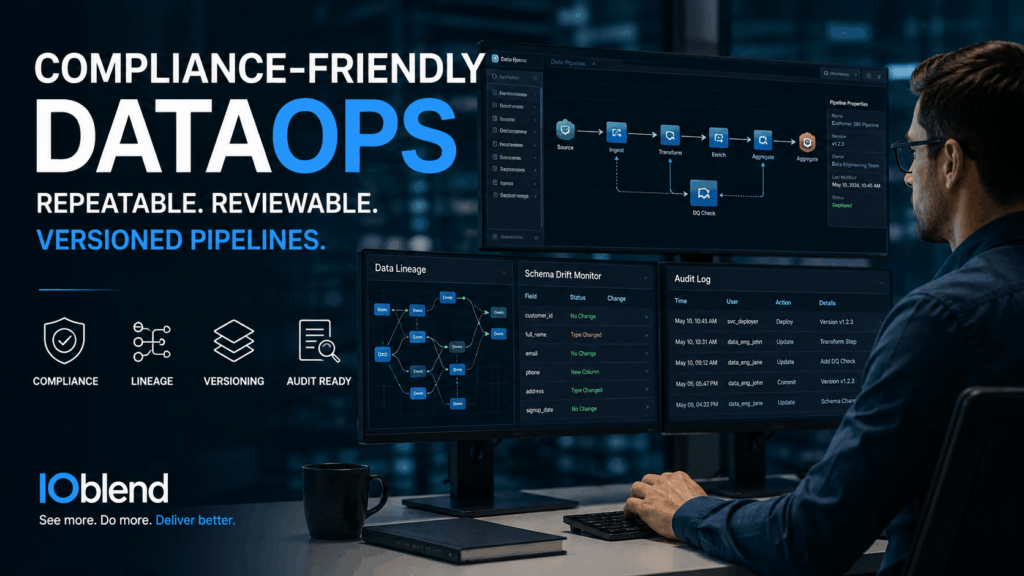
Compliance-friendly DataOps represents an operational framework that embeds strict regulatory governance directly into the data engineering lifecycle. Instead of treating data auditing as an afterthought, this methodology ensures that data transformation pipelines are systematically repeatable, fully reviewable, and meticulously versioned. In practice, this means every single record can be traced back to its precise source code state and ingestion window.
Fragmented Pipelines and the Cost of Chaos
Modern enterprise data architectures are frequently crippled by structural drift and opaque processing layers. Data experts regularly battle with fragmented workflows where a sudden upstream schema change completely breaks downstream analytics without warning.
When a financial institution or healthcare provider is asked to explain a specific metric to an auditor, they are forced into a scramble of manual code inspection, database log reconstruction, and speculative debugging.
Consider a real-world use case in banking risk assessment. If a machine learning model flags an account based on transformed streaming data, compliance requires absolute reproducibility. Without pipeline versioning, reproducing the exact state of that data from three months ago is practically impossible.
The IOblend Solution
Designed as an advanced end-to-end data integration application with native DataOps capability, IOblend standardises production data pipelines on Apache Spark as portable JSON and Python playbooks.
IOblend resolves enterprise governance challenges through an array of built-in production features:
- Automated Record-Level Lineage: It registers auditing metadata dynamically across the full data journey, giving experts precise visibility from source to sink.
- Pipeline Versioning and Collaborative Development: The platform natively supports strict CI/CD deployment principles and pipeline versioning via the IOblend Designer, allowing teams to track code changes and safely replay historical data transforms.
- Real-Time Governance & Drift Handling: IOblend features out-of-the-box Change Data Capture (CDC) and instantaneous schema drift monitoring. If changes happen, they do not fail quietly; you see exactly what was impacted down to individual records.
- Advanced Error Management: Out-of-the-box data validation and exception handling isolate anomalies into secure quarantine zones for immediate SME review.
Standardise your data governance and build production-ready, auditable pipelines with ease.

Data Architecture: The Forever Quest for Data Perfection
Data architecture is a critical component of modern business strategy, enabling organisations to leverage their data assets effectively.

Mind the Gap: Bridging GenAI Promise and Practice
While the benefits of GenAI are promising, the path to adopting such technologies is not straightforward at all.

Data Automation: Investing Pennies to Save Pounds
Data automation is a critical enabler of efficiency, accuracy, and strategic insight. It also considerably lowers your business cost when producing said insight

Data Strategy: Taking a Business View
Data strategy aligns data-related activities with the strategic goals of an organisation. It’s about turning data into value.

Out with the Old ETL: Navigating the Upgrade Maze
Today, we have tools and experience to make digital transformation easy. Yet, most organisations cling to their antiquated data systems and analytics. Why?

Smart Data Integration: More $ for Your D&A Budget
Data integration is the heart of data engineering. The process is inherently complex and consumes the most of your D&A budget.