Zero-Lag Operations: Stream Database Changes to Your Lakehouse
💾 Did you know? The “data downtime” caused by traditional batch processing costs the average enterprise approximately £12,000 per minute.
The Concept: Moving at the Speed of Change
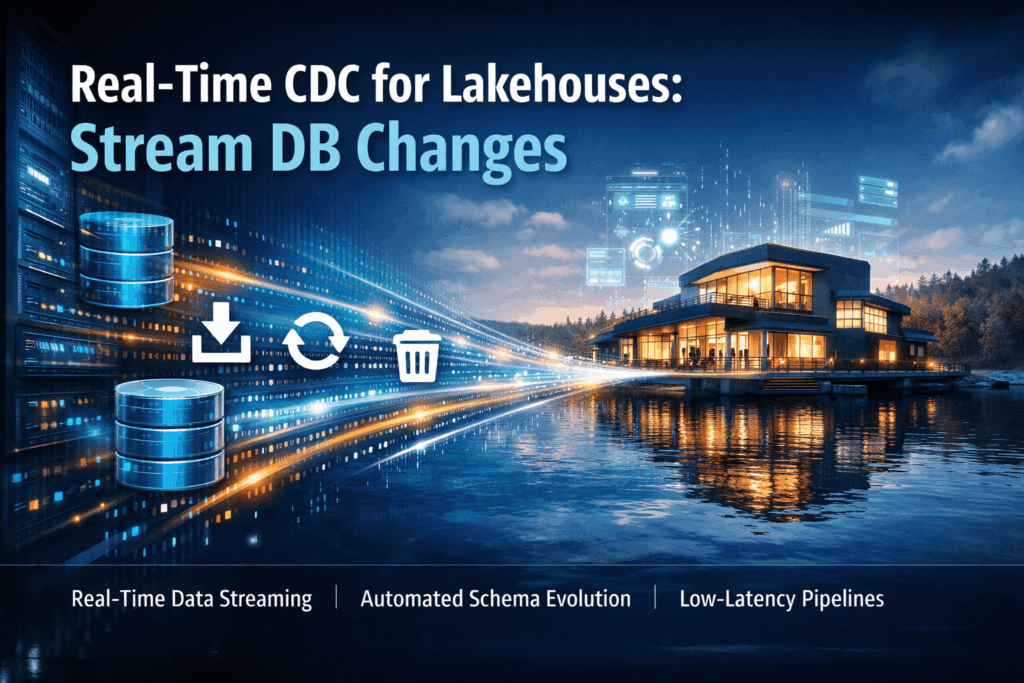
Zero-lag operations rely on a transition from periodic “snapshots” to continuous “streams.” Instead of moving massive blocks of data at midnight, modern architectures capture every insert, update, or delete in a source database the moment it happens. This approach, often powered by Change Data Capture (CDC), ensures that your Data Lakehouse remains a living, breathing mirror of your operational systems. It transforms the Lakehouse from a historical archive into a real-time engine for decision-making.
The Friction: Why Legacy Integration Fails
Most organisations still grapple with the “Batch Trap.” Traditional ETL (Extract, Transform, Load) processes are inherently high-latency. When a customer updates their profile or a stock level changes in a relational database, that information often sits stagnant until the next scheduled sync.
This delay creates several critical issues:
- Stale Insights: Data scientists build models on “yesterday’s news,” leading to inaccurate forecasting.
- Operational Fragility: Massive batch windows put immense pressure on source systems, often slowing down production databases during peak hours.
- Complex Transformation: Mapping changing relational schemas to a flat Lakehouse structure manually is a recipe for broken pipelines and inconsistent metadata.
How IOblend Solves the Latency Gap
Bridging the gap between operational databases and a Lakehouse requires more than just a fast pipe; it requires an intelligent execution engine. IOblend addresses these challenges by replacing complex, hand-coded pipelines with a streamlined, “Zero-Lag” framework.
- Real-Time Data Streaming: IOblend moves beyond legacy batching, allowing for continuous data flow from any source to your Lakehouse with minimal latency.
- Automated Schema Evolution: One of the biggest headaches in database streaming is schema drift. IOblend automatically detects and handles changes in the source database, ensuring your Lakehouse tables stay synchronised without manual intervention.
- Advanced Data Engineering: Built on a powerful Spark-based engine, IOblend allows you to perform complex transformations on the fly as data streams in, rather than waiting until it lands.
- Multi-Cloud Agility: Whether your Lakehouse sits on Azure, AWS, or GCP, IOblend provides a unified interface to manage these streams, reducing the “vendor lock-in” often found in native cloud tools.
Stop waiting for your data to catch up, achieve true operational synchronicity with IOblend.

Keeping it Fresh: Don’t Let Your Data Go to Waste
Data must be fresh, i.e. readily available, relevant, trustworthy, and current to be of any practical use. Otherwise, it loses its value.

Behind Every Analysis Lies Great Data Wrangling
Most companies spend the vast majority of their resources doing data wrangling in a predominantly manual way. This is very costly and inhibits data analytics.

Data Architecture: The Forever Quest for Data Perfection
Data architecture is a critical component of modern business strategy, enabling organisations to leverage their data assets effectively.

Mind the Gap: Bridging GenAI Promise and Practice
While the benefits of GenAI are promising, the path to adopting such technologies is not straightforward at all.

Data Automation: Investing Pennies to Save Pounds
Data automation is a critical enabler of efficiency, accuracy, and strategic insight. It also considerably lowers your business cost when producing said insight

Data Strategy: Taking a Business View
Data strategy aligns data-related activities with the strategic goals of an organisation. It’s about turning data into value.