



The Urgency of Now: Real-Time Data in Analytics
The Urgency of Now: Real-Time Data in Analytics ✈️ Did you know? Every minute of delay in airline operations can cost as much as £100 per minute for a single aircraft. With thousands of flights daily, those minutes add up fast. Just like in aviation, in data analytics, even small delays can lead to big

Still Confused in 2025? AI, ML & Data Science Explained
Still Confused in 2025? AI, ML & Data Science Explained…finally It seems everyone in business circles talks about these days. AI will solve all our business challenges and make/save us a ton of money. AI will replace manual labour with clever agents. It will change the world and our business will be at the forefront

Beyond Spreadsheets: The CFO’s Path to Data-Driven Decisions
Beyond Spreadsheets: The CFO’s Path to Data-Driven Decisions 📊 Did you know? Companies leveraging data-driven insights consistently report a significant uplift in profitability – often exceeding 20%. That’s not just a marginal gain; it’s a game-changer. The Data-Driven CFO The modern Chief Financial Officer operates in a world awash with data. No longer solely focused
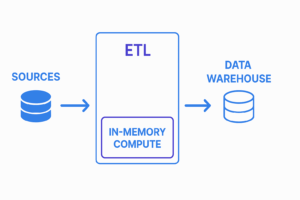
Shift Left: Unleashing Data Power with In-Memory Processing
Mind the Gap: Bridging Data Shift Left: Unleashing Data Power with In-Memory Processing 💻 Did you know? Organisations that implement shift-left strategies can experience up to a 30% reduction in compute costs by cleaning data at the source. The Essence of Shifting Left Shifting data compute and governance “left” essentially means moving these processes closer

Mind the Gap: Bridging Data Silos with IOblend Integration
Mind the Gap: Bridging Data Silos to Unlock Organisational Insight 💾 Did you know? Back in the early days of computing, data integration often involved physically moving punch cards between different machines – a rather less streamlined approach than what we have today! Piecing Together the Data Puzzle At its core, data integration is about

Rapid AI Implementation: Moving Beyond Proof of Concept
Rapid AI Implementation: Moving Beyond Proof of Concept 💻 Did you know that in 2024, the average time it took for a business to deploy an AI model from the experimental stage to full production was approximately six months? Bringing AI Experiments to Life The journey of an AI project typically begins with a “proof
