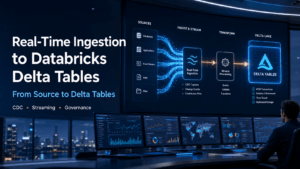
Zero-Lag Operations: Stream Database Changes to Your Lakehouse
💾 Did you know? The “data downtime” caused by traditional batch processing costs the average enterprise approximately £12,000 per minute.
The Concept: Moving at the Speed of Change
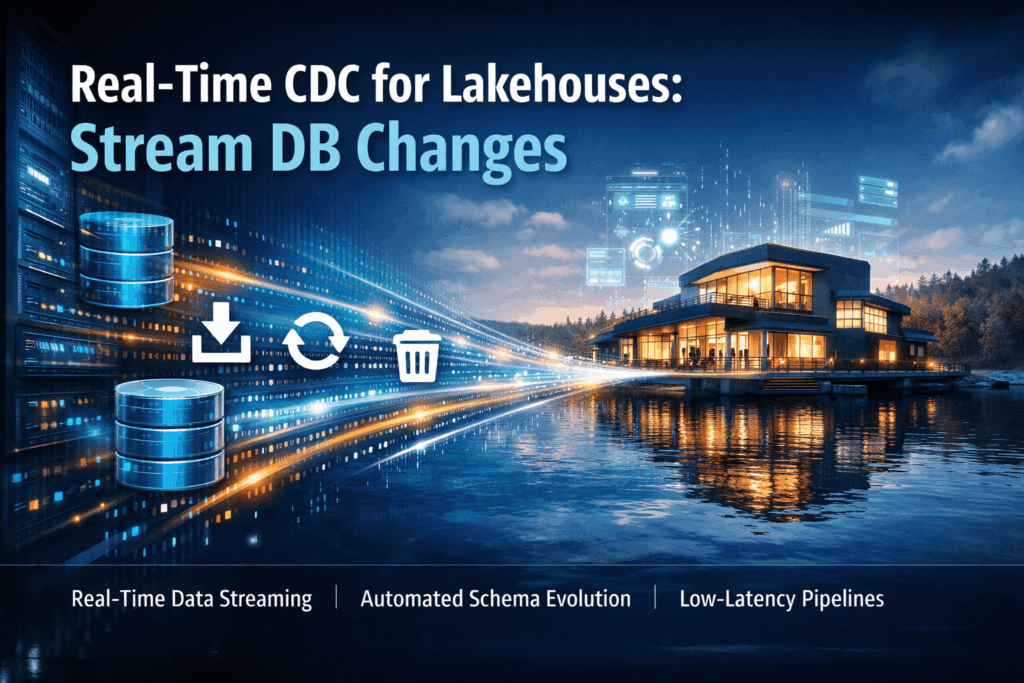
Zero-lag operations rely on a transition from periodic “snapshots” to continuous “streams.” Instead of moving massive blocks of data at midnight, modern architectures capture every insert, update, or delete in a source database the moment it happens. This approach, often powered by Change Data Capture (CDC), ensures that your Data Lakehouse remains a living, breathing mirror of your operational systems. It transforms the Lakehouse from a historical archive into a real-time engine for decision-making.
The Friction: Why Legacy Integration Fails
Most organisations still grapple with the “Batch Trap.” Traditional ETL (Extract, Transform, Load) processes are inherently high-latency. When a customer updates their profile or a stock level changes in a relational database, that information often sits stagnant until the next scheduled sync.
This delay creates several critical issues:
- Stale Insights: Data scientists build models on “yesterday’s news,” leading to inaccurate forecasting.
- Operational Fragility: Massive batch windows put immense pressure on source systems, often slowing down production databases during peak hours.
- Complex Transformation: Mapping changing relational schemas to a flat Lakehouse structure manually is a recipe for broken pipelines and inconsistent metadata.
How IOblend Solves the Latency Gap
Bridging the gap between operational databases and a Lakehouse requires more than just a fast pipe; it requires an intelligent execution engine. IOblend addresses these challenges by replacing complex, hand-coded pipelines with a streamlined, “Zero-Lag” framework.
- Real-Time Data Streaming: IOblend moves beyond legacy batching, allowing for continuous data flow from any source to your Lakehouse with minimal latency.
- Automated Schema Evolution: One of the biggest headaches in database streaming is schema drift. IOblend automatically detects and handles changes in the source database, ensuring your Lakehouse tables stay synchronised without manual intervention.
- Advanced Data Engineering: Built on a powerful Spark-based engine, IOblend allows you to perform complex transformations on the fly as data streams in, rather than waiting until it lands.
- Multi-Cloud Agility: Whether your Lakehouse sits on Azure, AWS, or GCP, IOblend provides a unified interface to manage these streams, reducing the “vendor lock-in” often found in native cloud tools.
Stop waiting for your data to catch up, achieve true operational synchronicity with IOblend.

Predictive Aircraft Maintenance with Agentic AI
Predictive Aircraft Maintenance: Consolidating Data from Engine Sensors and MRO Systems 🛫 Did you know that leveraging Big Data analytics for predictive aircraft maintenance can reduce unscheduled aircraft downtime by up to 30% Predictive Maintenance: The Core Concept Predictive Maintenance (PdM) in aviation is the strategic shift from a time-based or reactive approach to an ‘as-needed’ model,

Digital Twin Evolution: Big Data & AI with
The Industrial Renaissance: How Agentic AI and Big Data Power the Self-Optimising Digital Twin 🏭 Did You Know? A fully realised industrial Digital Twin, underpinned by real-time data, has been proven to reduce unplanned production downtime by up to 20%. The Digital Twin Evolution The Digital Twin is a sophisticated, living, virtual counterpart of a physical production system. It

Real-Time Risk Modelling with Legacy & Modern Data
Risk Modelling in Real-time: Integrating Legacy Oracle/HP Underwriting Data with Modern External Datasets 💼 Did you know that in the time it takes to brew a cup of tea, a real-time risk model could have processed enough data to flag over 60 million potential fraudulent insurance claims? The Real-Time Risk Modelling Imperative Real-time risk modelling is

Unify Clinical & Financial Data to Cut Readmissions
Clinical-Financial Synergy: The Seamless Integration of Clinical and Financial Data to Minimise Readmissions 🚑 Did You Know? Unnecessary hospital readmissions within 30 days represent a colossal financial burden, often reflecting suboptimal transitional care. Clinical-Financial Synergy: The Seamless Integration of Clinical and Financial Data to Minimise Readmissions The Convergence of Clinical and Financial Data The convergence of clinical and financial

Agentic Pipelines and Real-Time Data with Guardrails
The New Era of ETL: Agentic Pipelines and Real-Time Data with Guardrails For years, ETL meant one thing — moving and transforming data in predictable, scheduled batches, often using a multitude of complementary tools. It was practical, reliable, and familiar. But in 2025, well, that’s no longer enough. Let’s have a look at the shift

Real-Time Insurance Claims with CDC and Spark
From Batch to Real-Time: Accelerating Insurance Claims Processing with CDC and Spark 💼 Did you know? In the insurance sector, the move from overnight batch processing to real-time stream processing has been shown to reduce the average claims settlement time from several days to under an hour in highly automated systems. Real-Time Data and Insurance